This 19th century French breakfront side cabinet is an elegant and highly decorative example of Early 19th century craftsmanship, reflecting the French interpretation of Edwardian taste with a strong neoclassical influence. The rectangular break-fronted top is cross-banded in richly figured calamander and centered with an inlaid rosette, surrounded by delicately polychrome-painted berrying vines that introduce refined color and classical ornamentation. Below, the central cabinet door is inlaid in calamander and decorated with a finely executed Classical vignette depicting a bacchic scene, adding an artistic and narrative element to the design. Above and to either side, a central frieze drawer is flanked by two recessed frieze drawers and cabinet doors, each embellished with ribbon-tied husk-draped swags in polychrome paint and accented with inlaid rosettes. The careful interplay of painted decoration and fine inlay reflects the early 19th century French fascination with classical revival forms interpreted through luxurious materials. The cabinet stands on calamander-inlaid square tapering legs terminating in block feet, providing a strong architectural base while maintaining graceful proportions. The contrast between satinwood, tulipwood inlay, and dark calamander cross-banding adds depth and visual richness, underscoring the quality of the workmanship throughout. Measuring 42 inches in height, 54 inches in width, and 21 inches in depth, this side cabinet is well proportioned for use in a dining room, salon, or entrance hall. In good condition, with minor wear consistent with age and use, it represents a distinguished and refined example of early 19th century French decorative furniture, ideal for collectors and interiors that appreciate classical elegance enriched with polychrome detail and fine inlay.
This 19th century French breakfront side cabinet is an elegant and highly decorative example of Early 19th century craftsmanship, reflecting the French interpretation of Edwardian taste with a strong neoclassical influence. The rectangular break-fronted top is cross-banded in richly figured calamander and centered with an inlaid rosette, surrounded by delicately polychrome-painted berrying vines that introduce refined color and classical ornamentation. Below, the central cabinet door is inlaid in calamander and decorated with a finely executed Classical vignette depicting a bacchic scene, adding an artistic and narrative element to the design. Above and to either side, a central frieze drawer is flanked by two recessed frieze drawers and cabinet doors, each embellished with ribbon-tied husk-draped swags in polychrome paint and accented with inlaid rosettes. The careful interplay of painted decoration and fine inlay reflects the early 19th century French fascination with classical revival forms interpreted through luxurious materials. The cabinet stands on calamander-inlaid square tapering legs terminating in block feet, providing a strong architectural base while maintaining graceful proportions. The contrast between satinwood, tulipwood inlay, and dark calamander cross-banding adds depth and visual richness, underscoring the quality of the workmanship throughout. Measuring 42 inches in height, 54 inches in width, and 21 inches in depth, this side cabinet is well proportioned for use in a dining room, salon, or entrance hall. In good condition, with minor wear consistent with age and use, it represents a distinguished and refined example of early 19th century French decorative furniture, ideal for collectors and interiors that appreciate classical elegance enriched with polychrome detail and fine inlay.

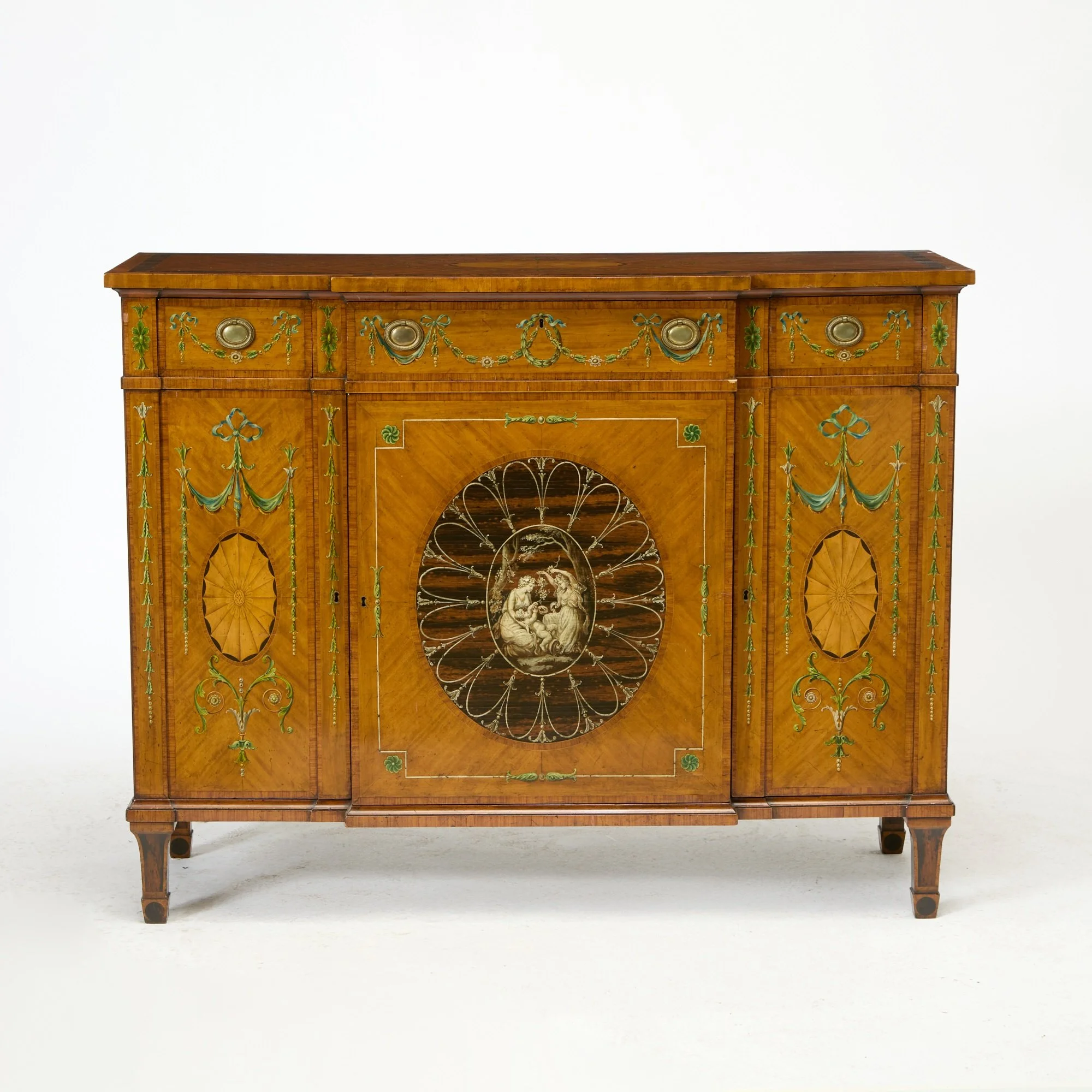 Image 1 of 13
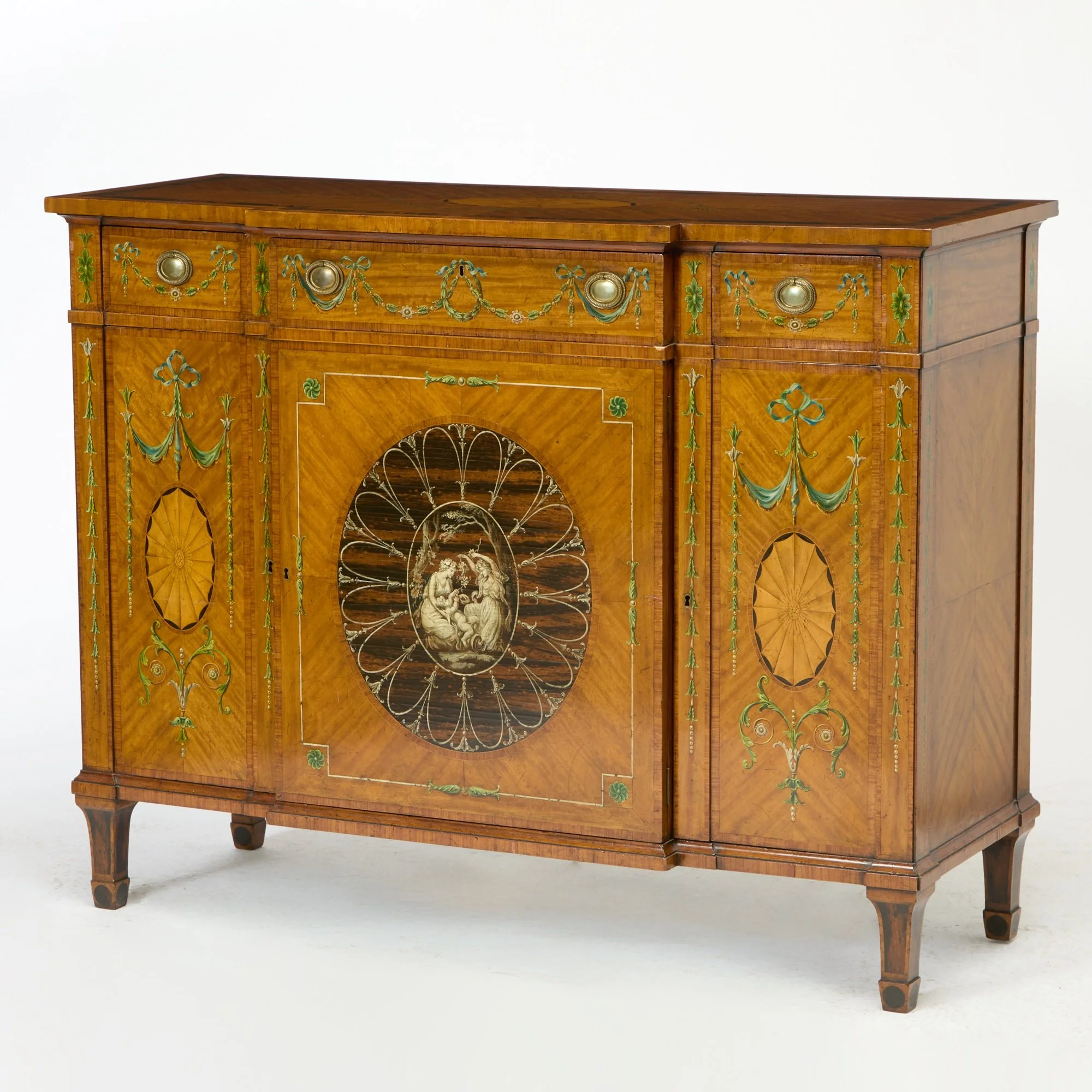 Image 2 of 13
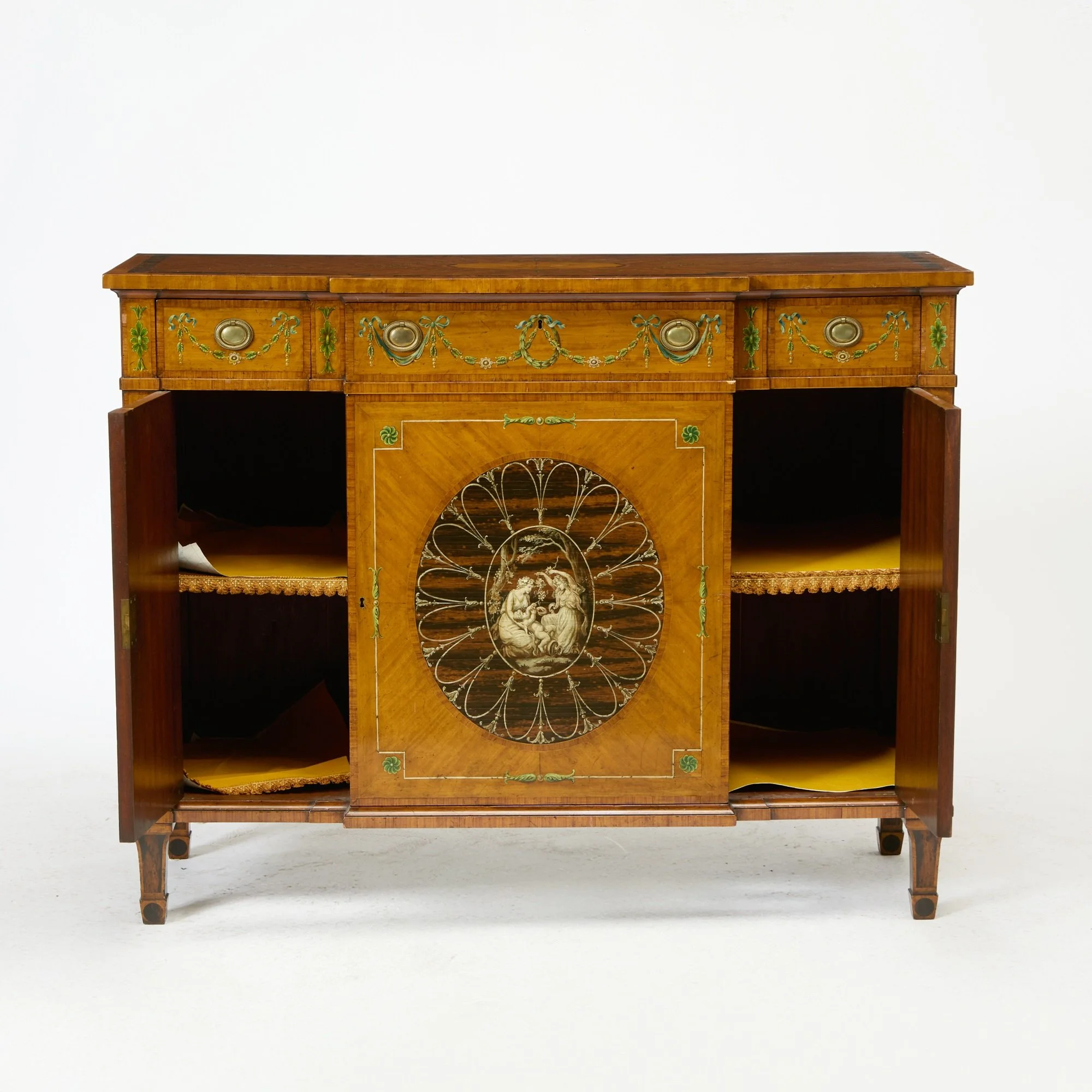 Image 3 of 13
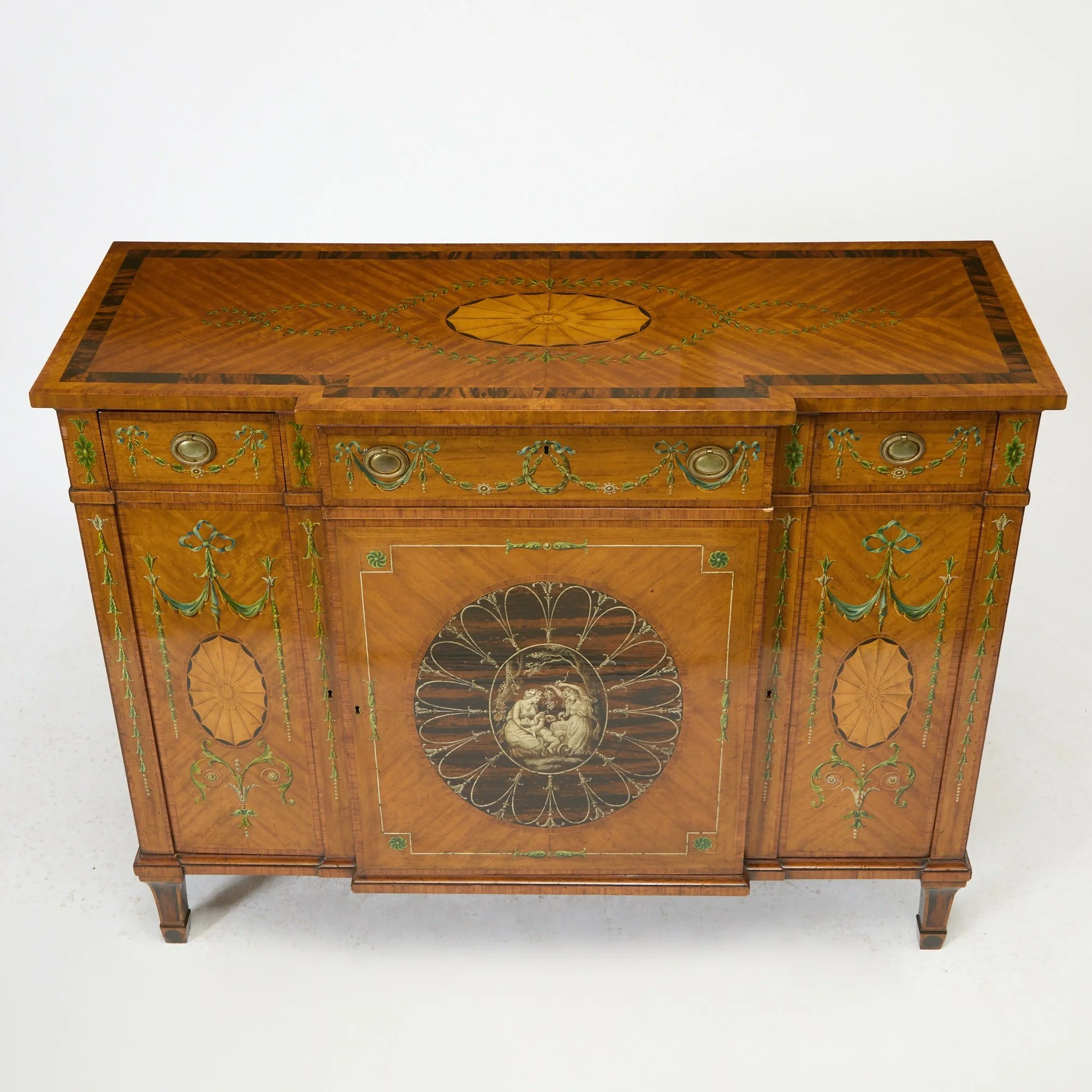 Image 4 of 13
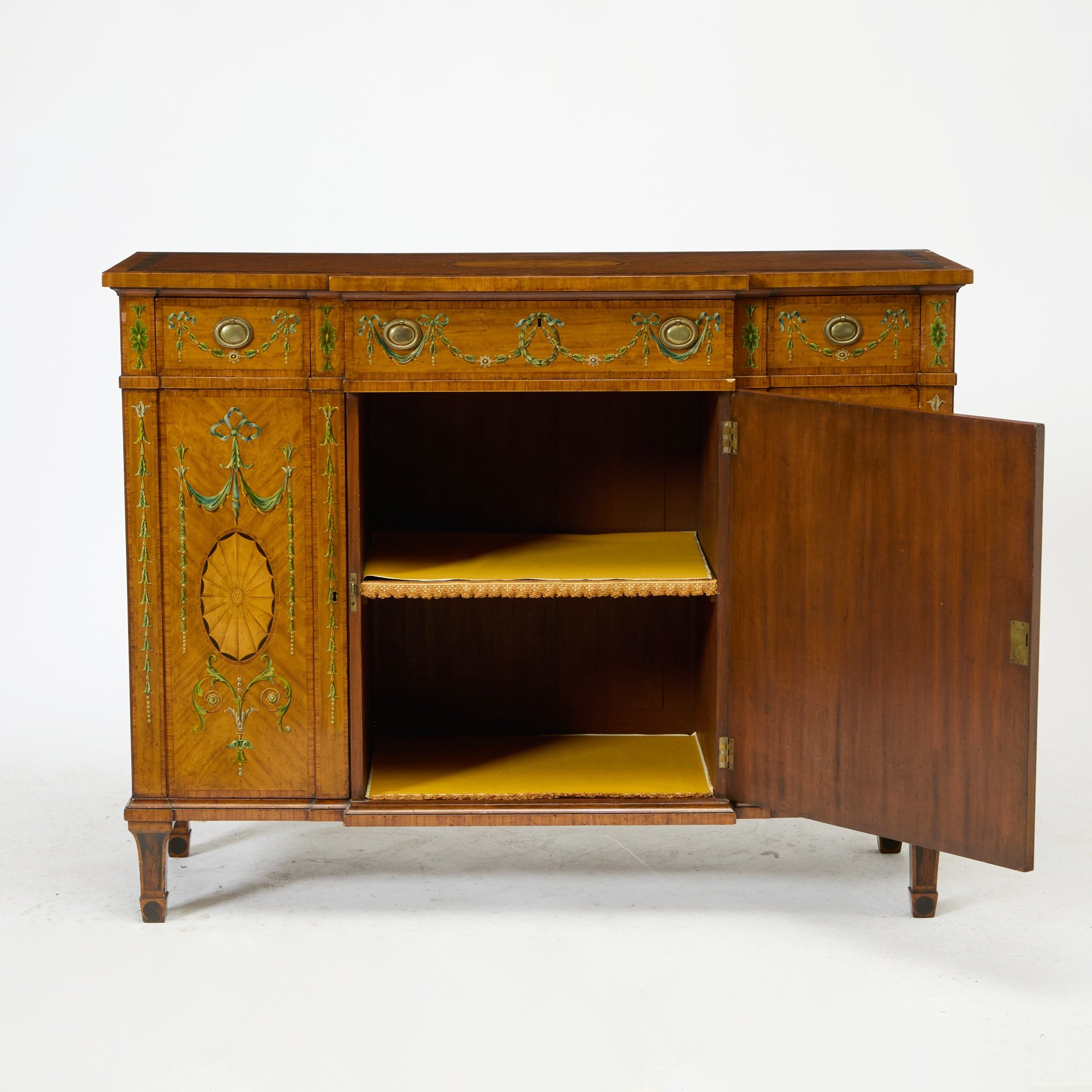 Image 5 of 13
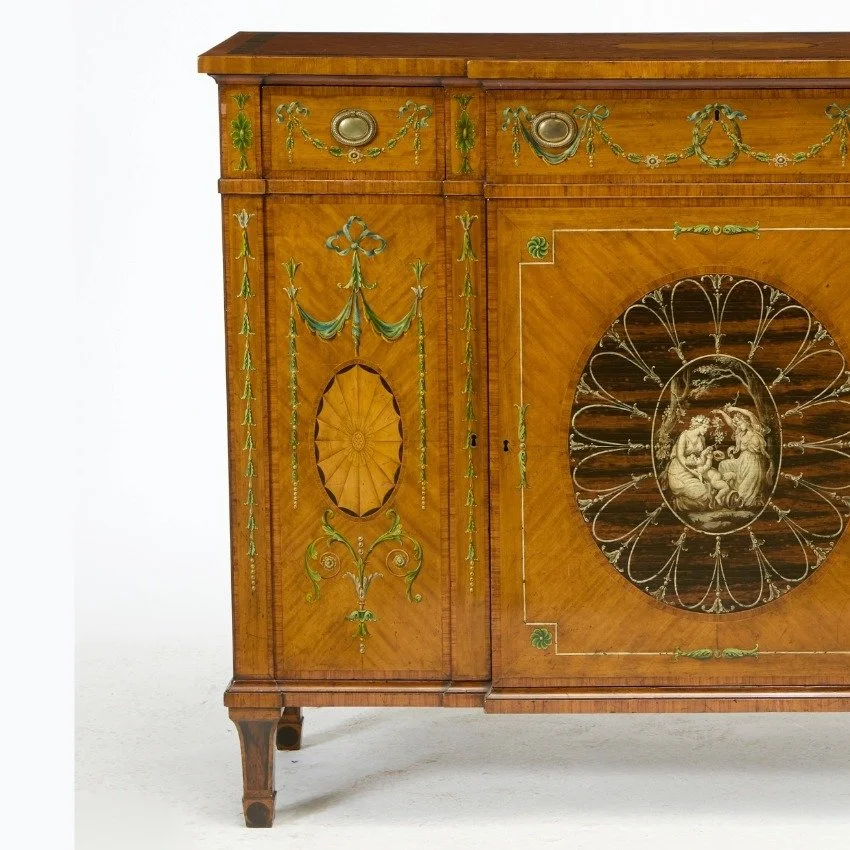 Image 6 of 13
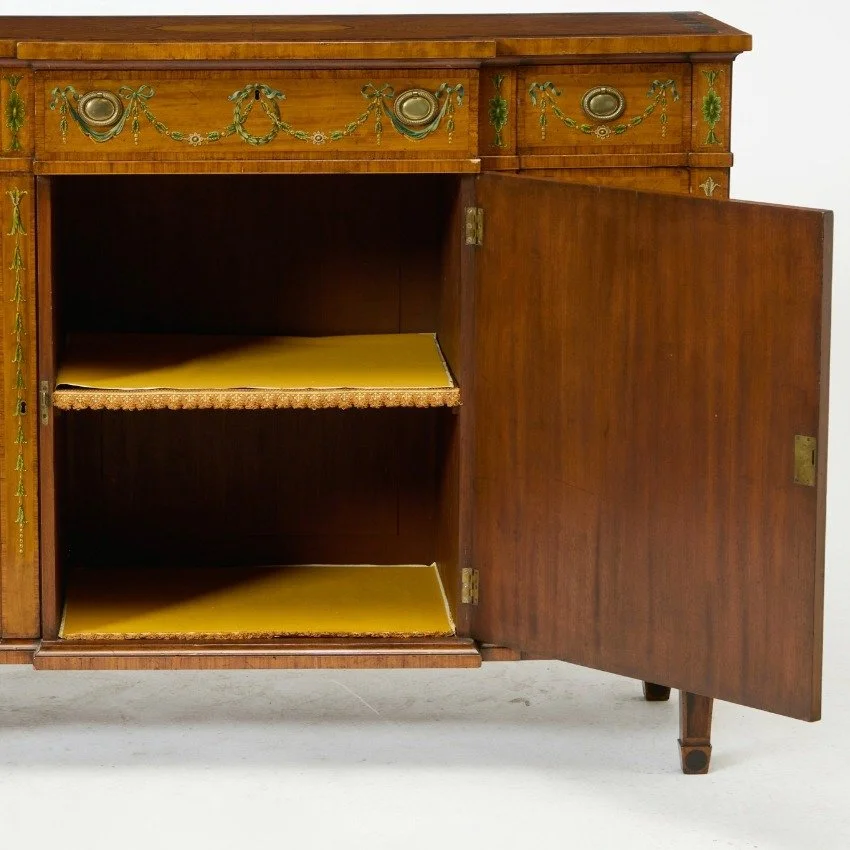 Image 7 of 13
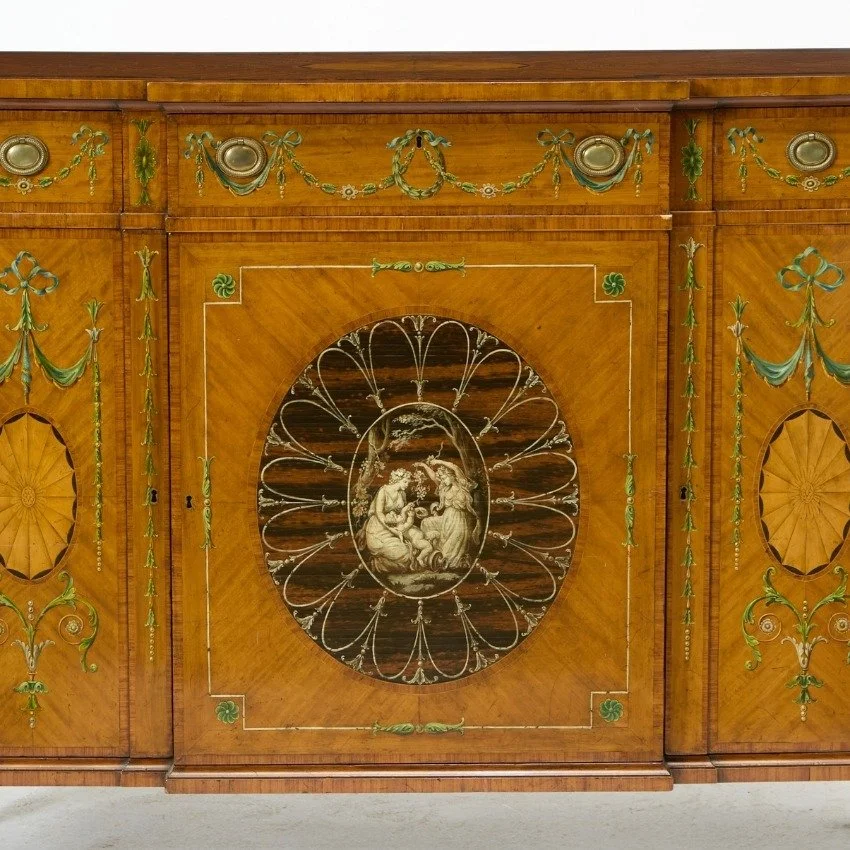 Image 8 of 13
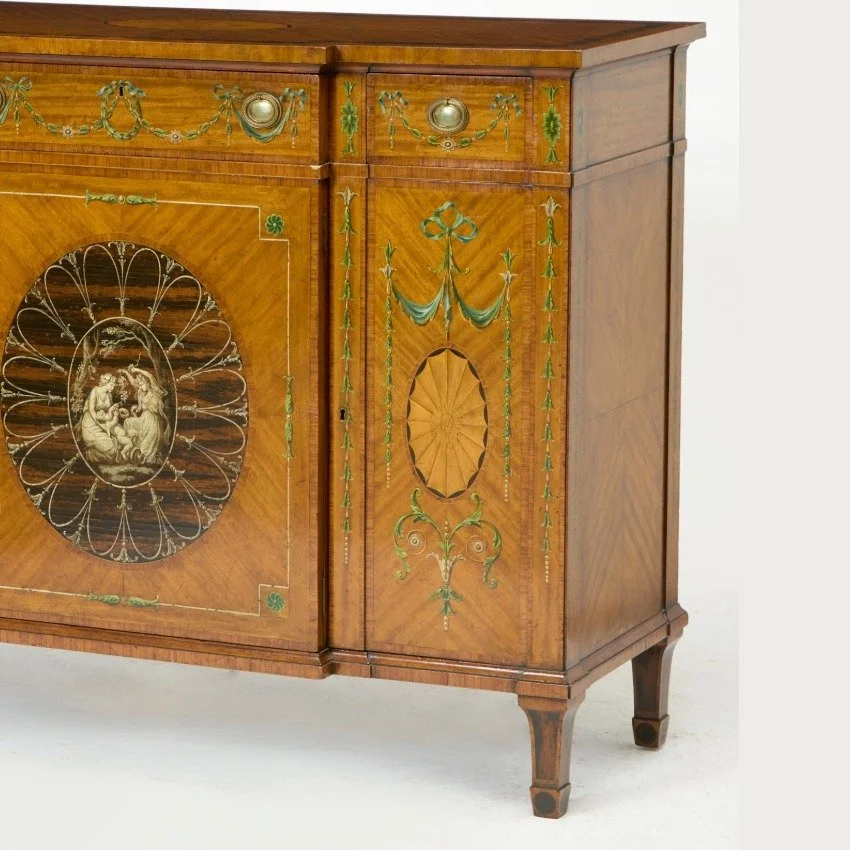 Image 9 of 13
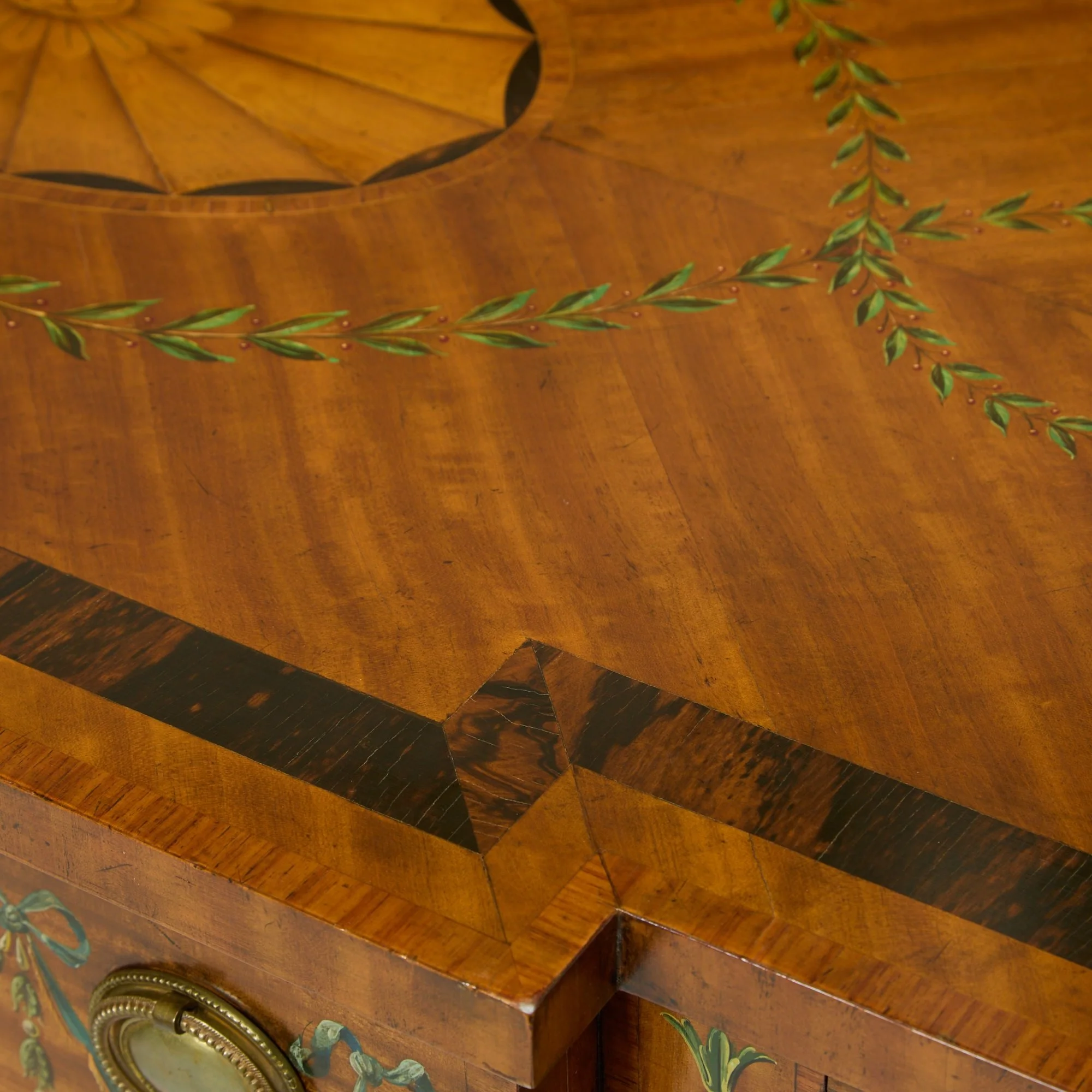 Image 10 of 13
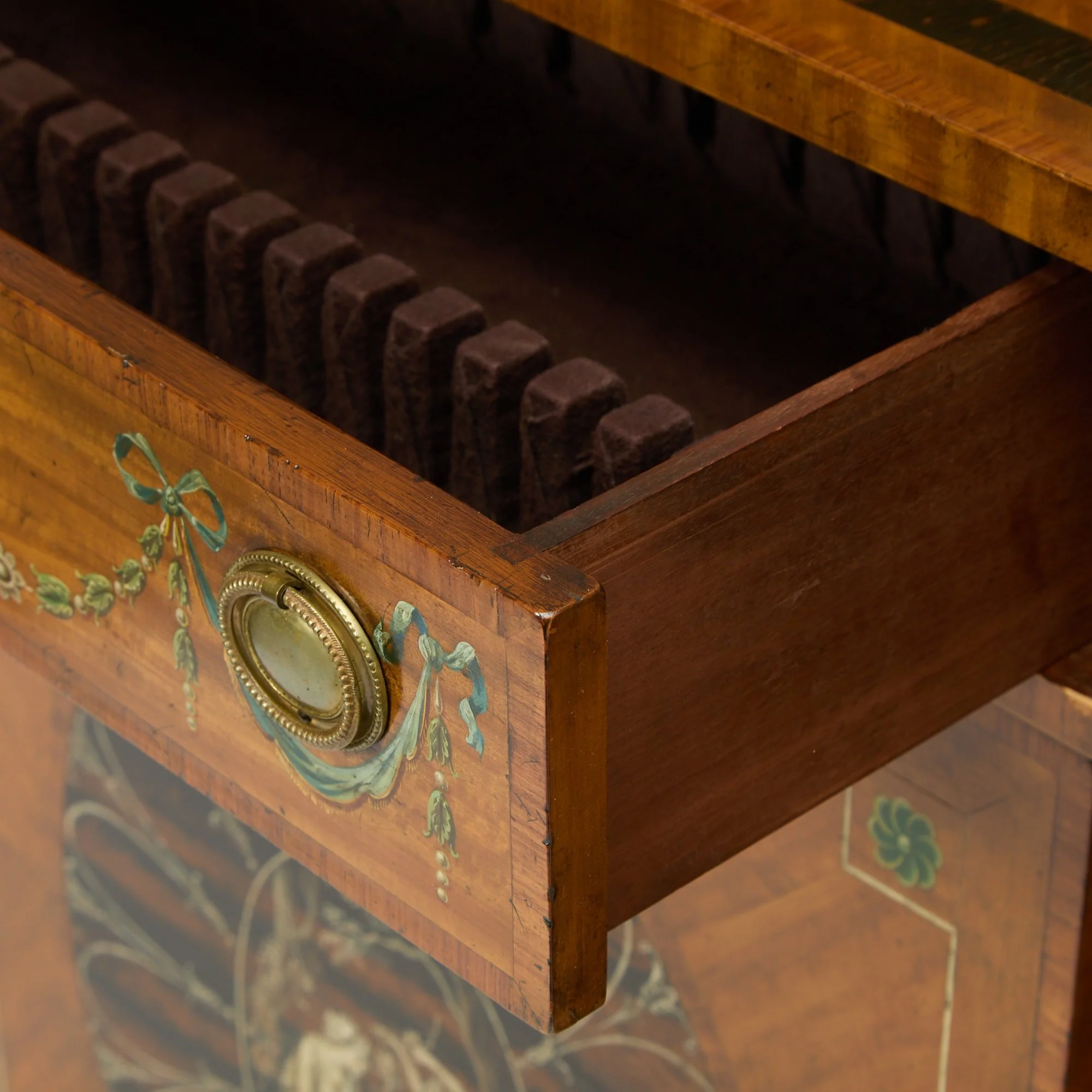 Image 11 of 13
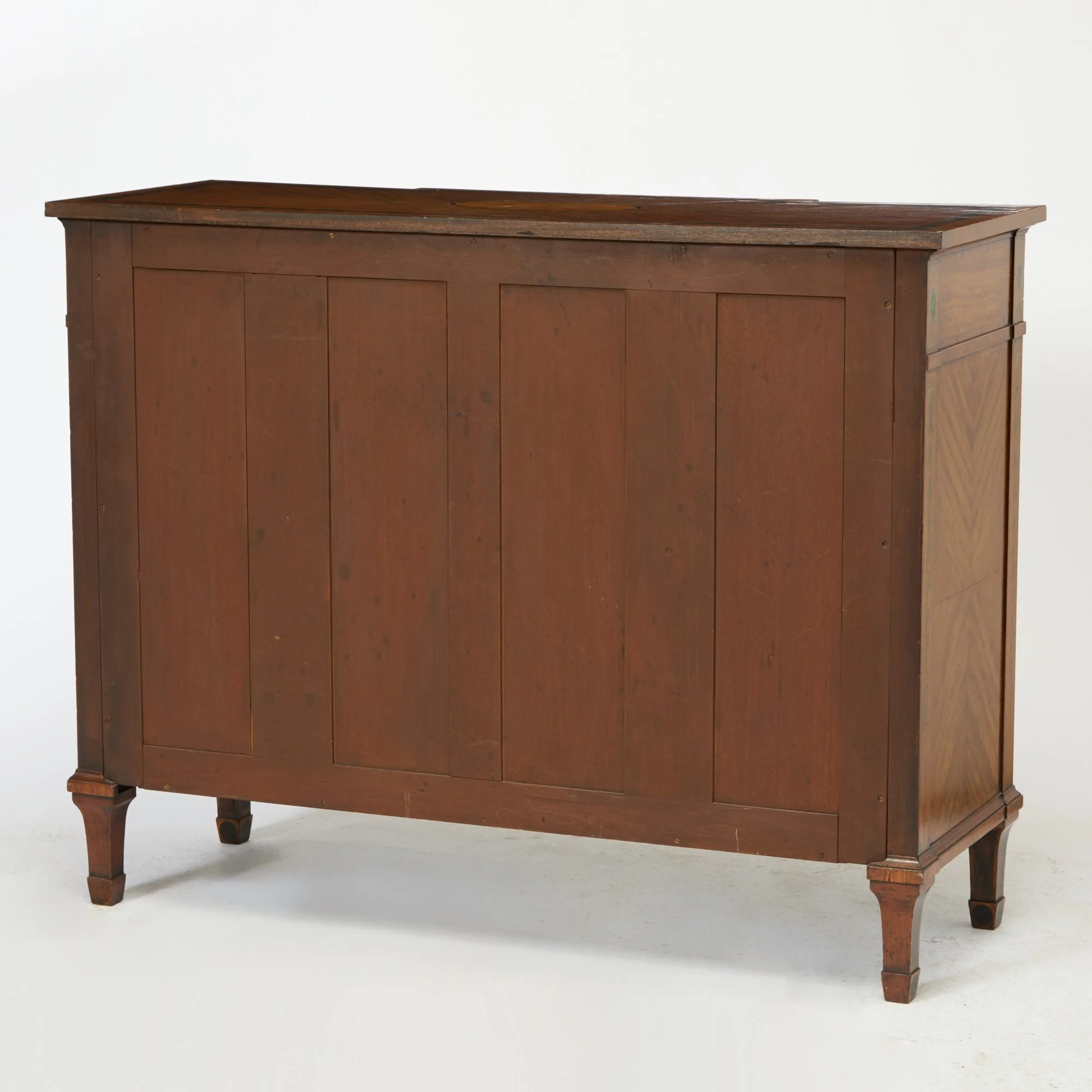 Image 12 of 13
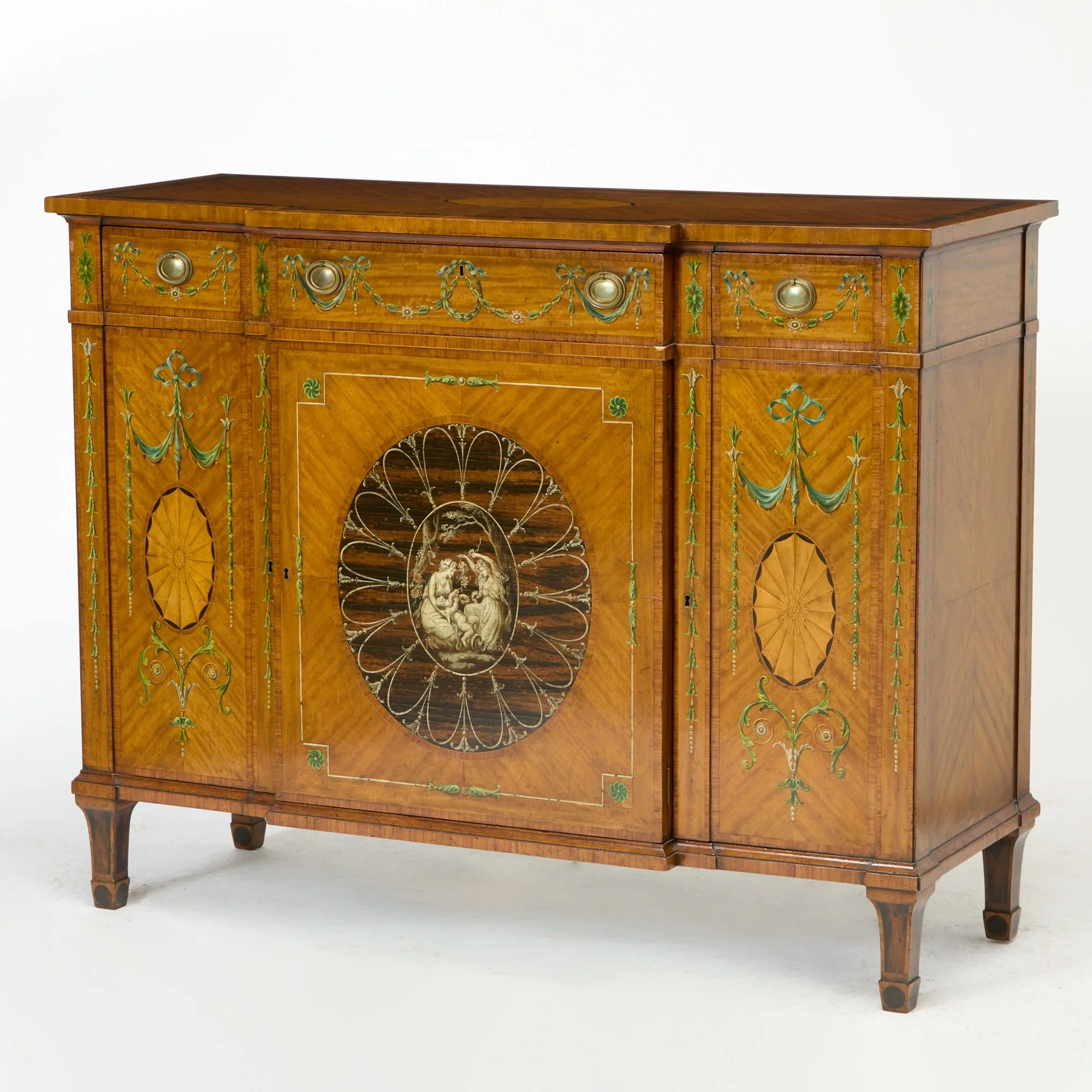 Image 13 of 13