Elegant antique Biedermeier vitrine cabinet dating to the early 19th century, circa 1820–1840, reflecting the restrained Neoclassical aesthetic associated with the Biedermeier period in Central Europe, particularly Austria and Germany. The cabinet is distinguished by its warm, golden-toned figured wood veneer, contrasting dark ebonized columns, and balanced architectural proportions.
The upper section features a stepped, architectural pediment centered by a distinctive semicircular dark inset, creating a striking decorative focal point. The façade is framed by slender, ebonized columns with classical capitals, flanking a pair of glazed doors fitted with delicate dark metal hardware. Behind the glass doors, multiple interior shelves provide practical space for displaying fine porcelain, crystal, glassware, books, and decorative objects. A broad lower drawer with discreet hardware adds useful storage while maintaining the cabinet’s harmonious appearance.
The cabinet rests on a shaped plinth with projecting block feet, while the carefully arranged geometric lines and contrasting finishes exemplify the elegant simplicity of Biedermeier furniture. Its golden figured wood, dark architectural accents, and refined decorative details make it a distinctive statement piece suitable for a traditional or eclectic interior. The backdrop is painted with white antique shade paint.
Of Austrian or German origin, this cabinet reflects the Central European Biedermeier tradition of approximately 1820–1840. Its tall, commanding proportions and glazed display area make it particularly suitable for a dining room, library, drawing room, or formal living space.
Measuring 79 inches high by 50.5 inches wide and 21 inches deep, this impressive antique vitrine combines architectural elegance with functional display and storage.
Elegant antique Biedermeier vitrine cabinet dating to the early 19th century, circa 1820–1840, reflecting the restrained Neoclassical aesthetic associated with the Biedermeier period in Central Europe, particularly Austria and Germany. The cabinet is distinguished by its warm, golden-toned figured wood veneer, contrasting dark ebonized columns, and balanced architectural proportions.
The upper section features a stepped, architectural pediment centered by a distinctive semicircular dark inset, creating a striking decorative focal point. The façade is framed by slender, ebonized columns with classical capitals, flanking a pair of glazed doors fitted with delicate dark metal hardware. Behind the glass doors, multiple interior shelves provide practical space for displaying fine porcelain, crystal, glassware, books, and decorative objects. A broad lower drawer with discreet hardware adds useful storage while maintaining the cabinet’s harmonious appearance.
The cabinet rests on a shaped plinth with projecting block feet, while the carefully arranged geometric lines and contrasting finishes exemplify the elegant simplicity of Biedermeier furniture. Its golden figured wood, dark architectural accents, and refined decorative details make it a distinctive statement piece suitable for a traditional or eclectic interior. The backdrop is painted with white antique shade paint.
Of Austrian or German origin, this cabinet reflects the Central European Biedermeier tradition of approximately 1820–1840. Its tall, commanding proportions and glazed display area make it particularly suitable for a dining room, library, drawing room, or formal living space.
Measuring 79 inches high by 50.5 inches wide and 21 inches deep, this impressive antique vitrine combines architectural elegance with functional display and storage.

 Image 1 of 11
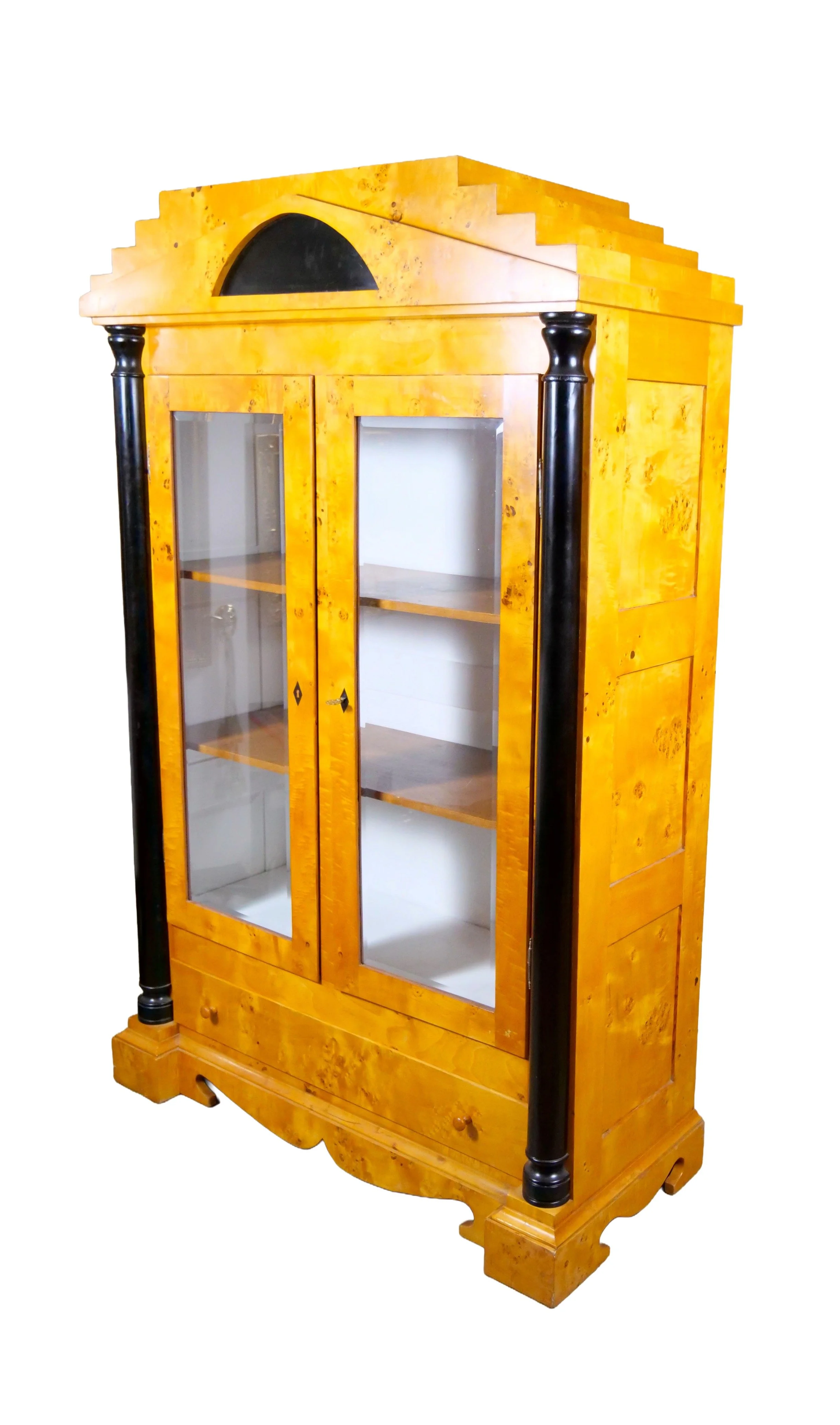 Image 2 of 11
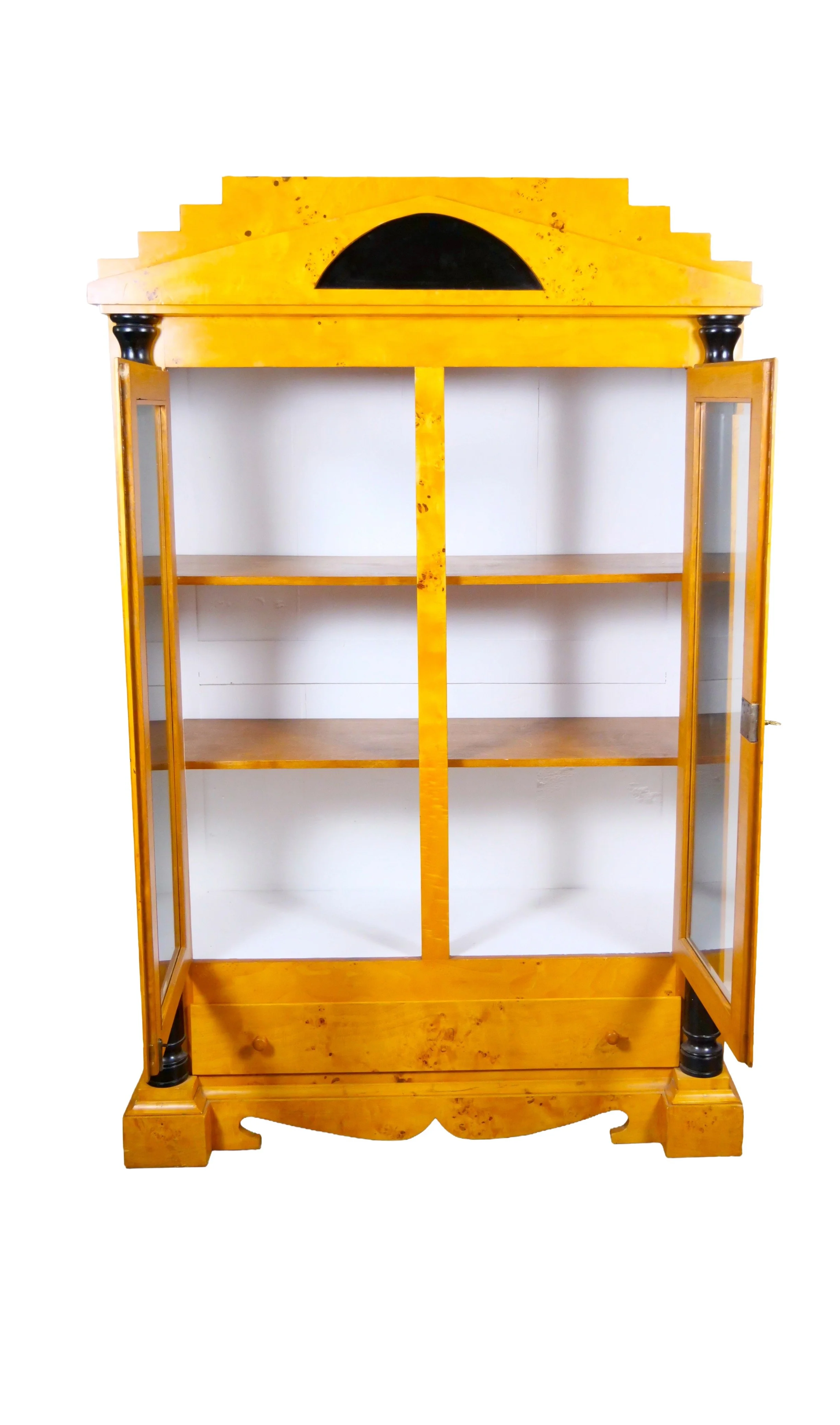 Image 3 of 11
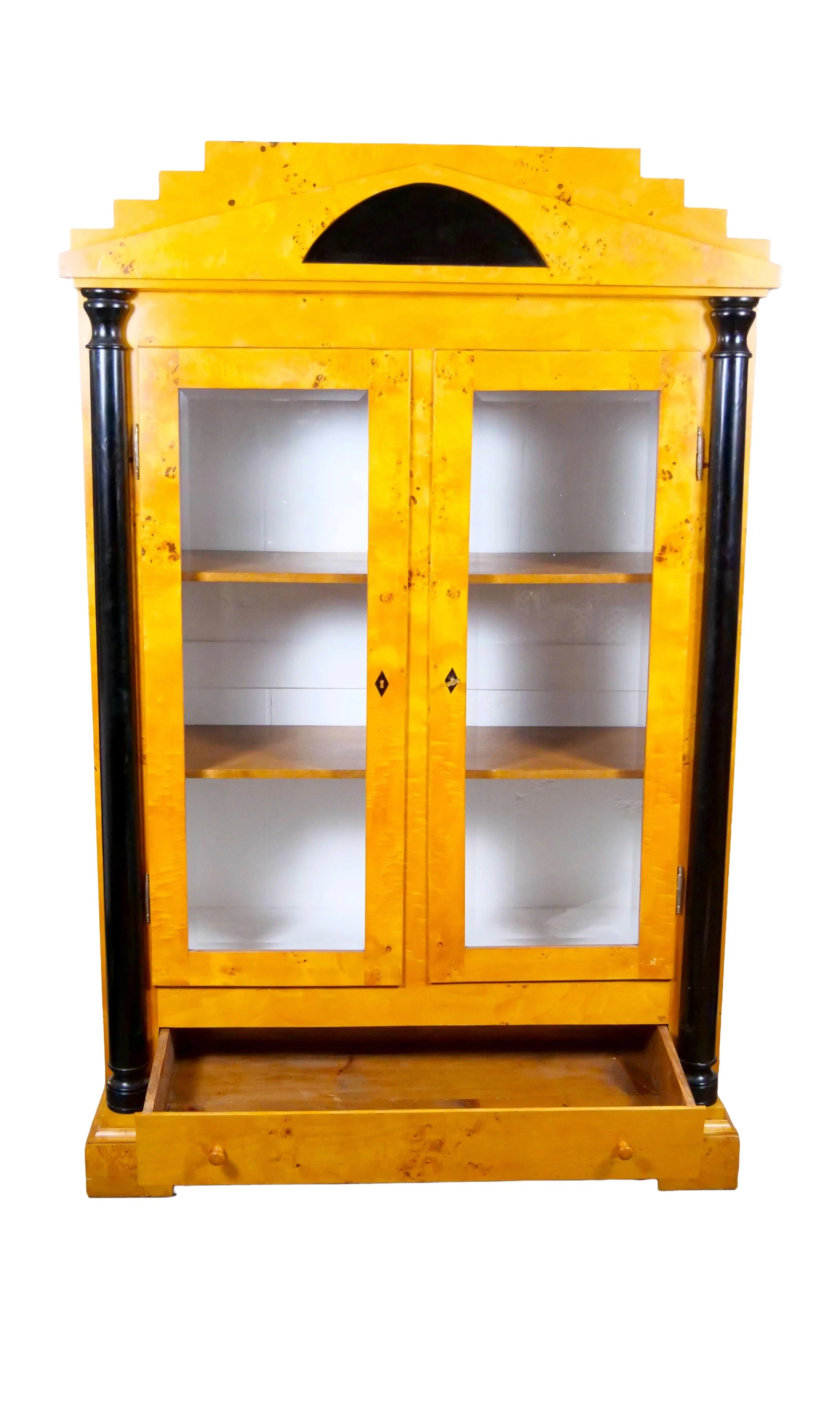 Image 4 of 11
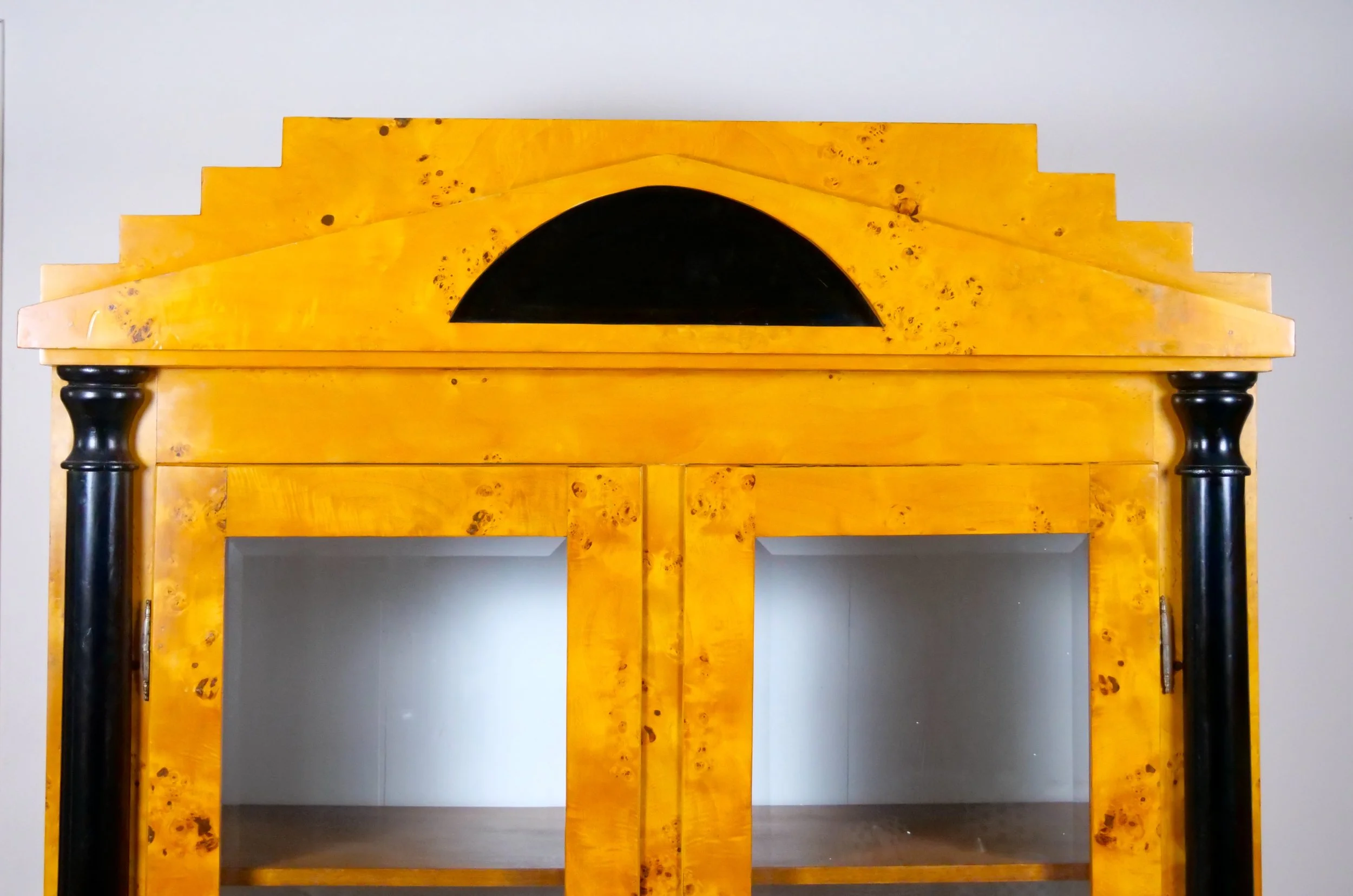 Image 5 of 11
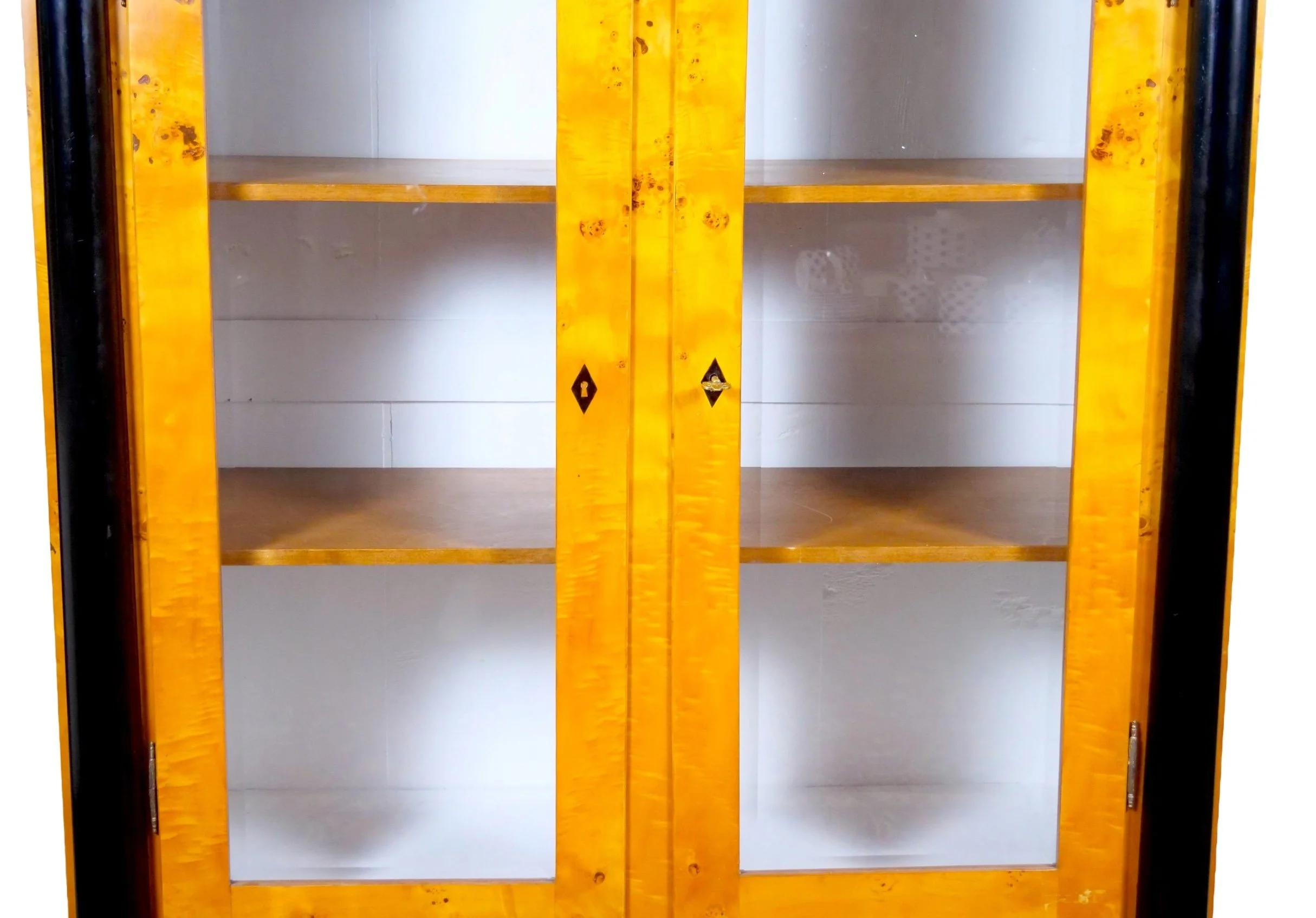 Image 6 of 11
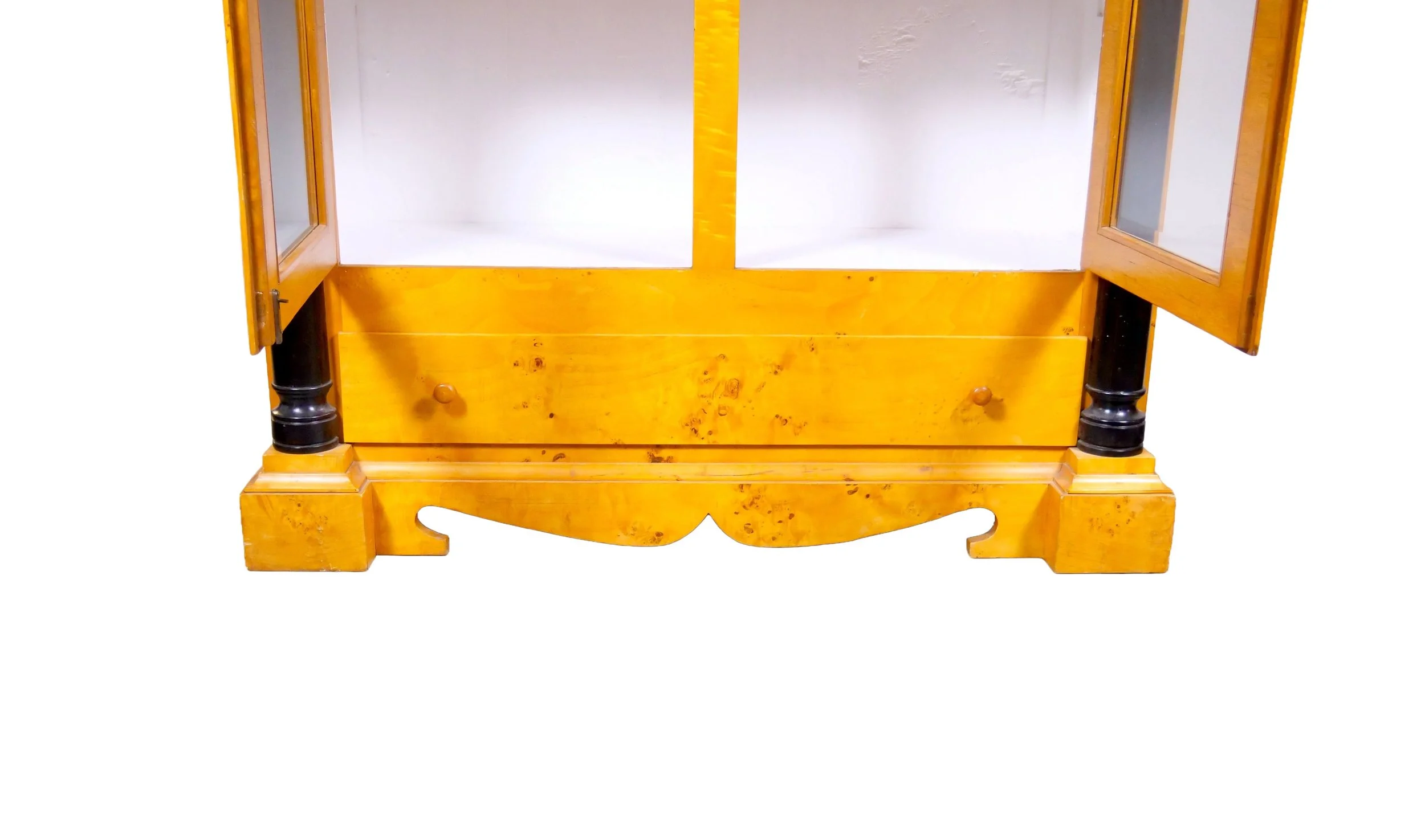 Image 7 of 11
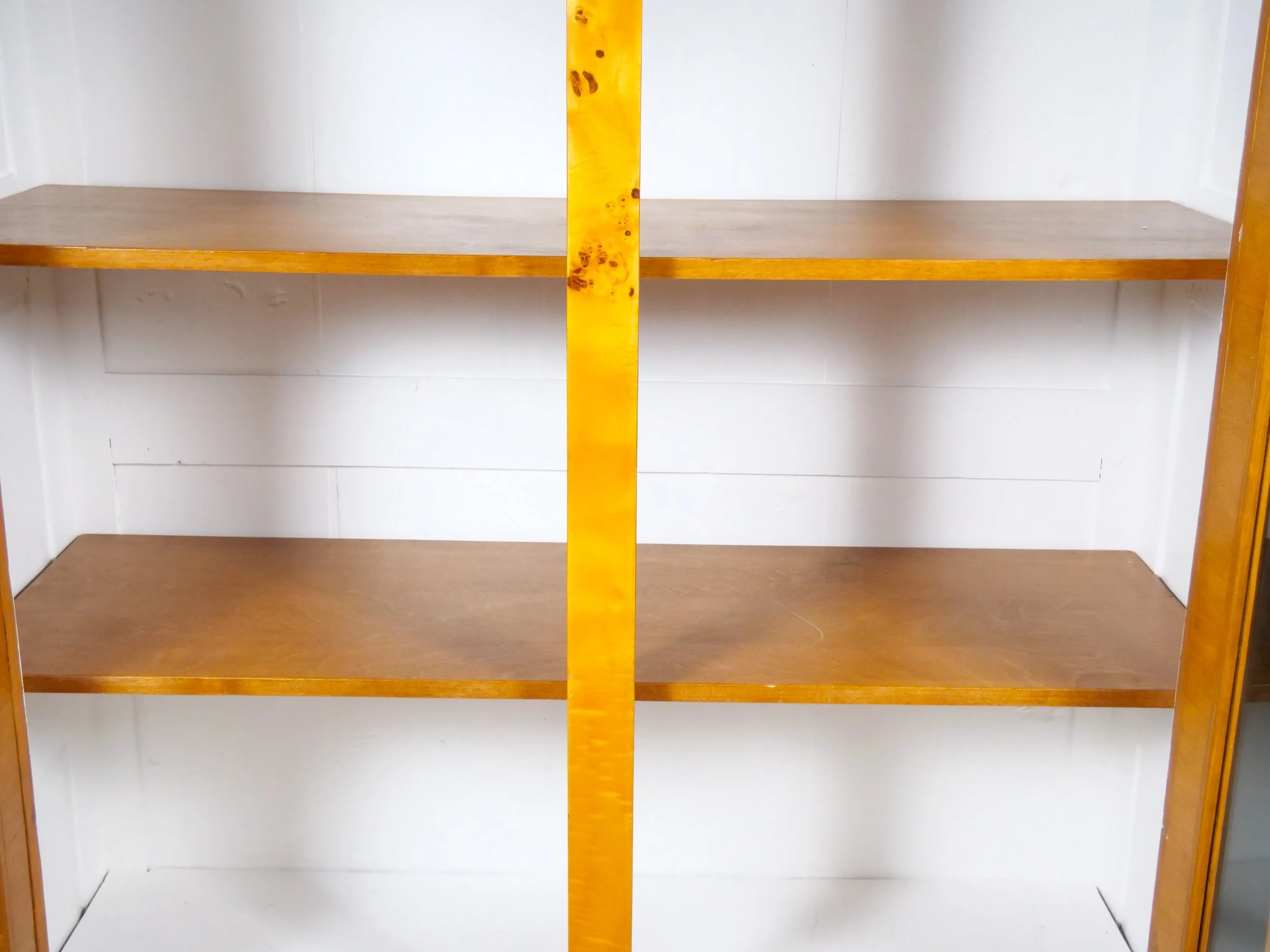 Image 8 of 11
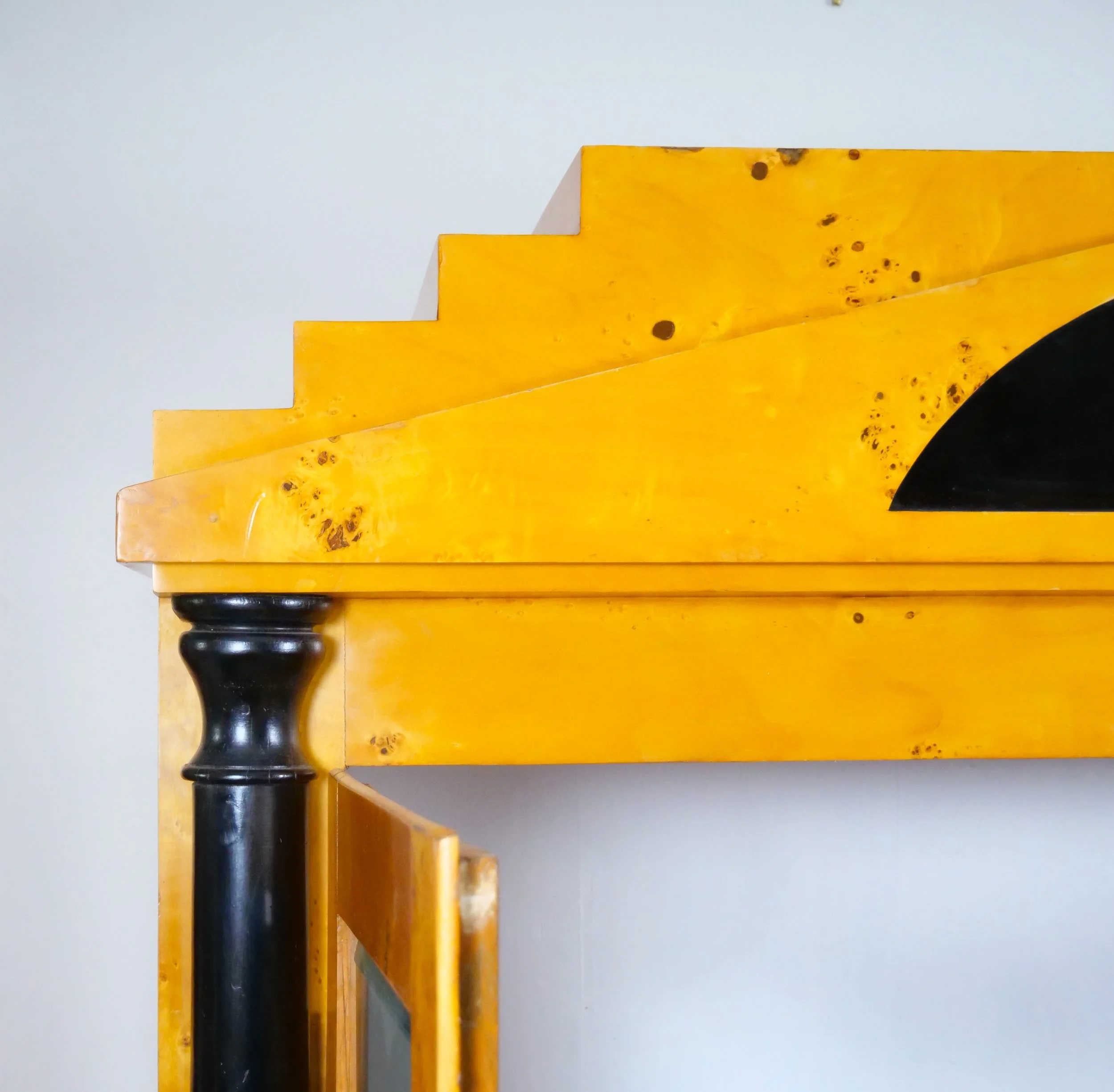 Image 9 of 11
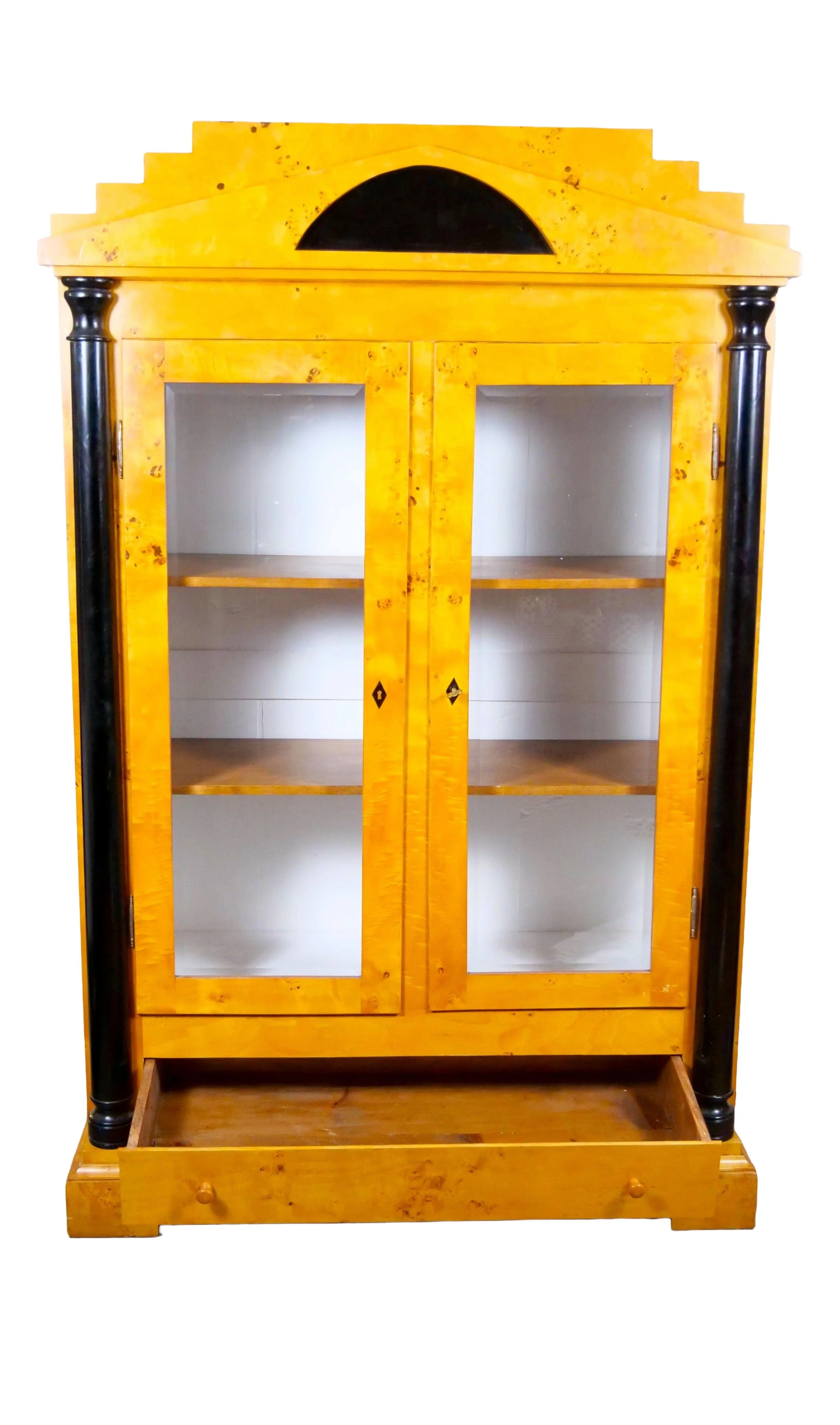 Image 10 of 11
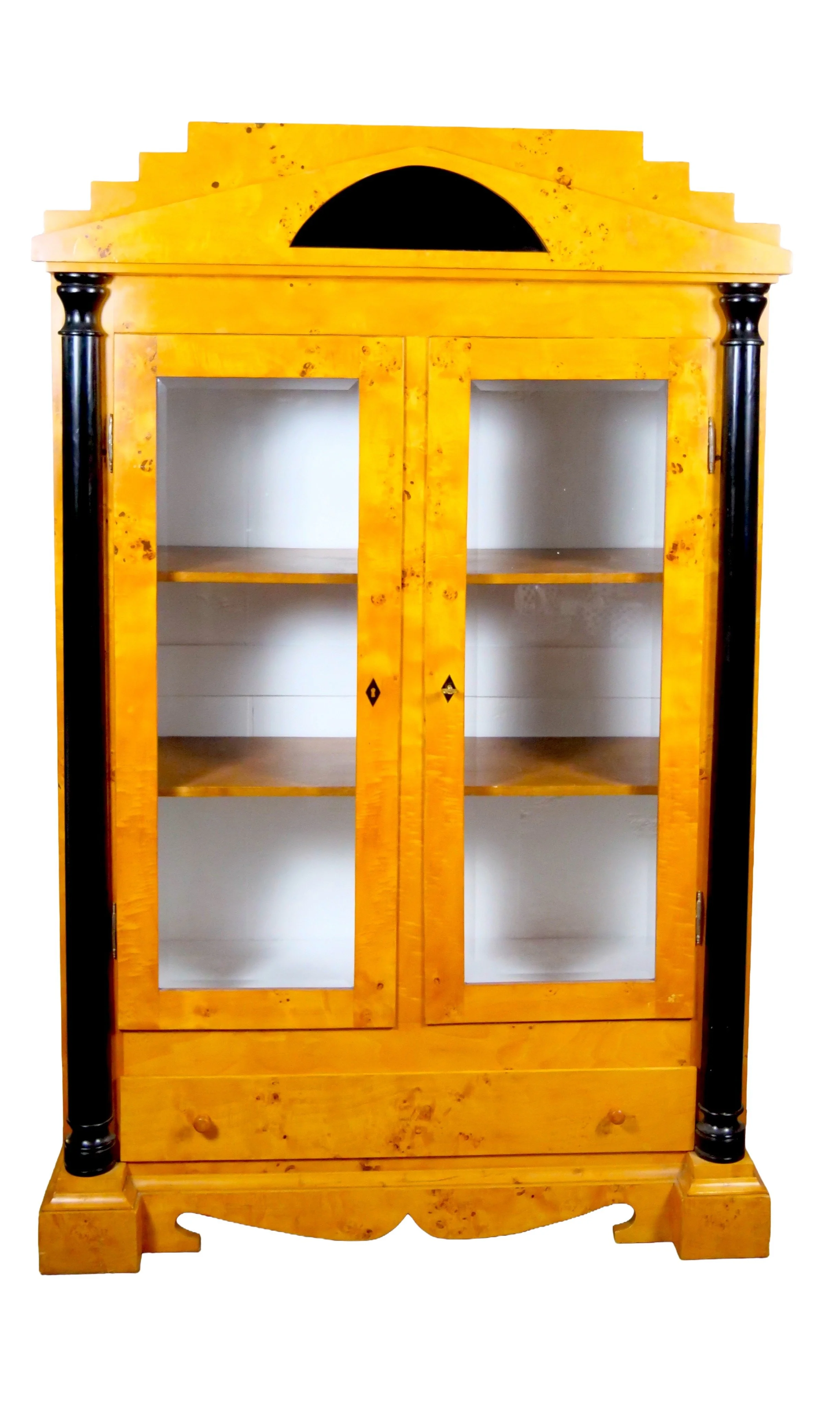 Image 11 of 11