An exquisite early 20th-century German Rosenthal porcelain figure titled “Trinkende” (“The Drinker”), designed by the distinguished German sculptor Ernst Wenck. The charming composition depicts a graceful young woman in a natural crouching position, bending forward as she drinks water from her delicately cupped hands. The figure is beautifully modeled with particular attention to the elegant contours, naturalistic proportions, and relaxed movement of the female form.
Her softly rendered auburn hair is arranged in a neat bun at the back of her head, complementing the understated and graceful character of the sculpture. The naturalistic pose and refined modeling convey a sense of quiet movement and spontaneity, reflecting the sophisticated figural porcelain produced by Rosenthal during the early 20th century and the naturalistic sensibility of the period.
The figure is presented on a rectangular white porcelain base and displays wonderful craftsmanship with delicate hand-finished details throughout. Measuring approximately 6 inches high, the sculpture rests on a rectangular base measuring approximately 4.2 inches wide by 2.4 inches deep, giving it an elegant and easily displayable scale. It would be particularly attractive placed on a console, cabinet, étagère, mantel, or within a collection of fine European porcelain sculpture.
The underside retains the Rosenthal manufacturer's mark and the appropriate impressed or incised markings, further documenting its origin. The combination of the graceful crouching pose, naturalistic modeling, refined facial features, and beautifully arranged hair makes this a particularly appealing example of Rosenthal's early 20th-century figural production.
The sculpture is in great antique condition, without cracks, chips, or repairs, with minor wear consistent with age and use. An elegant and charming example of German porcelain sculpture, it combines Art Nouveau-era sensibility with Ernst Wenck's refined and naturalistic treatment of the human figure.
An exquisite early 20th-century German Rosenthal porcelain figure titled “Trinkende” (“The Drinker”), designed by the distinguished German sculptor Ernst Wenck. The charming composition depicts a graceful young woman in a natural crouching position, bending forward as she drinks water from her delicately cupped hands. The figure is beautifully modeled with particular attention to the elegant contours, naturalistic proportions, and relaxed movement of the female form.
Her softly rendered auburn hair is arranged in a neat bun at the back of her head, complementing the understated and graceful character of the sculpture. The naturalistic pose and refined modeling convey a sense of quiet movement and spontaneity, reflecting the sophisticated figural porcelain produced by Rosenthal during the early 20th century and the naturalistic sensibility of the period.
The figure is presented on a rectangular white porcelain base and displays wonderful craftsmanship with delicate hand-finished details throughout. Measuring approximately 6 inches high, the sculpture rests on a rectangular base measuring approximately 4.2 inches wide by 2.4 inches deep, giving it an elegant and easily displayable scale. It would be particularly attractive placed on a console, cabinet, étagère, mantel, or within a collection of fine European porcelain sculpture.
The underside retains the Rosenthal manufacturer's mark and the appropriate impressed or incised markings, further documenting its origin. The combination of the graceful crouching pose, naturalistic modeling, refined facial features, and beautifully arranged hair makes this a particularly appealing example of Rosenthal's early 20th-century figural production.
The sculpture is in great antique condition, without cracks, chips, or repairs, with minor wear consistent with age and use. An elegant and charming example of German porcelain sculpture, it combines Art Nouveau-era sensibility with Ernst Wenck's refined and naturalistic treatment of the human figure.

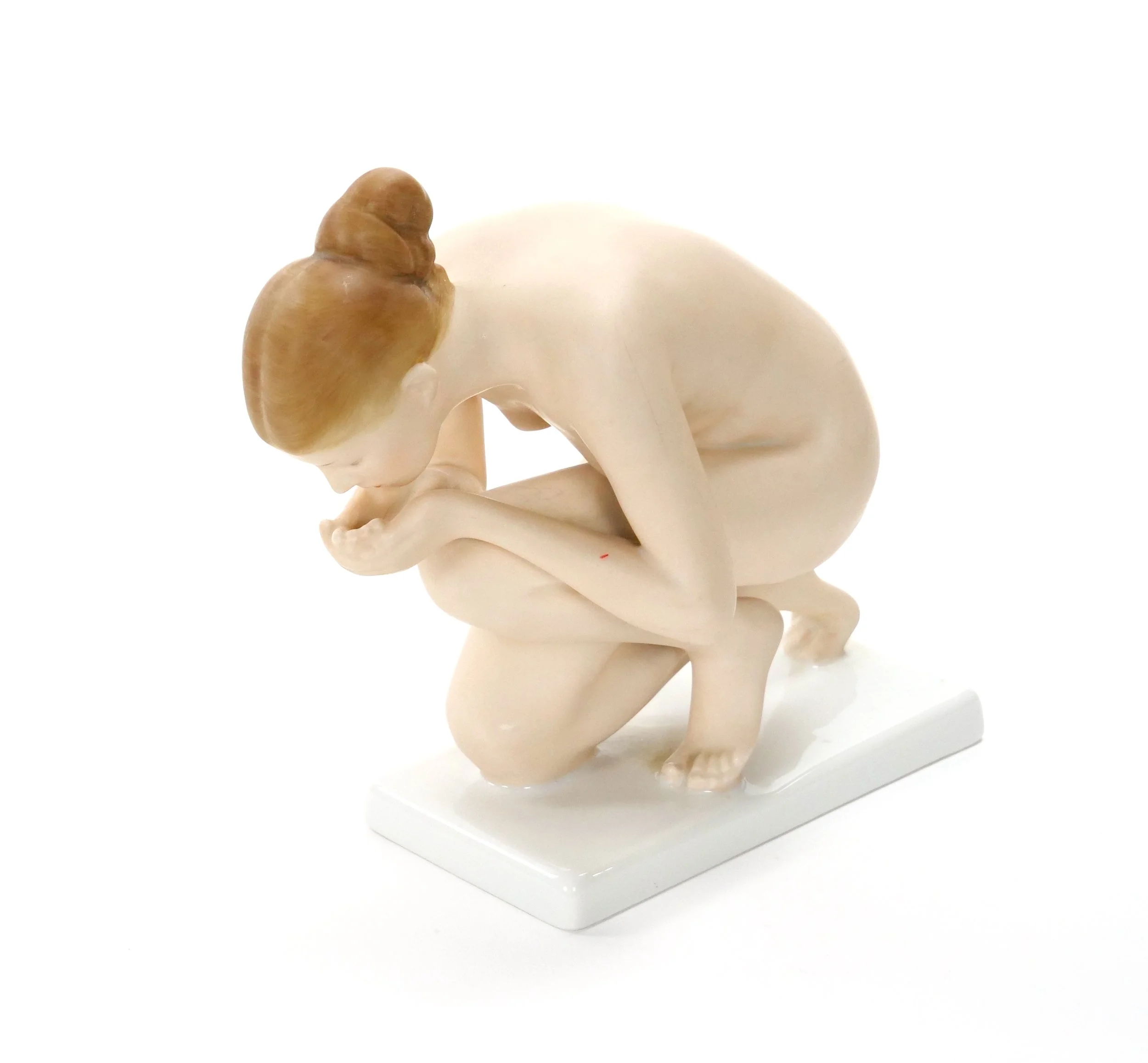 Image 1 of 9
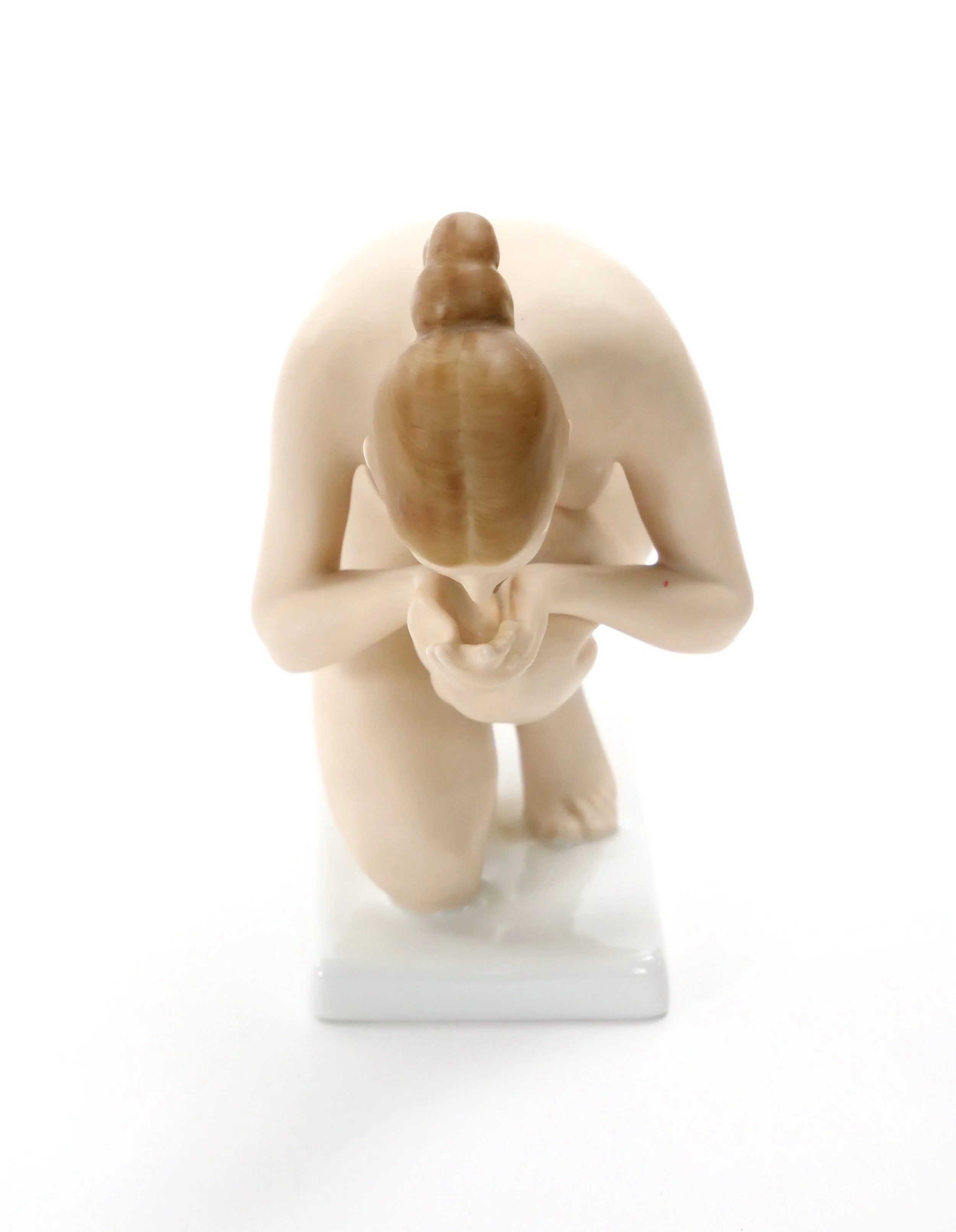 Image 2 of 9
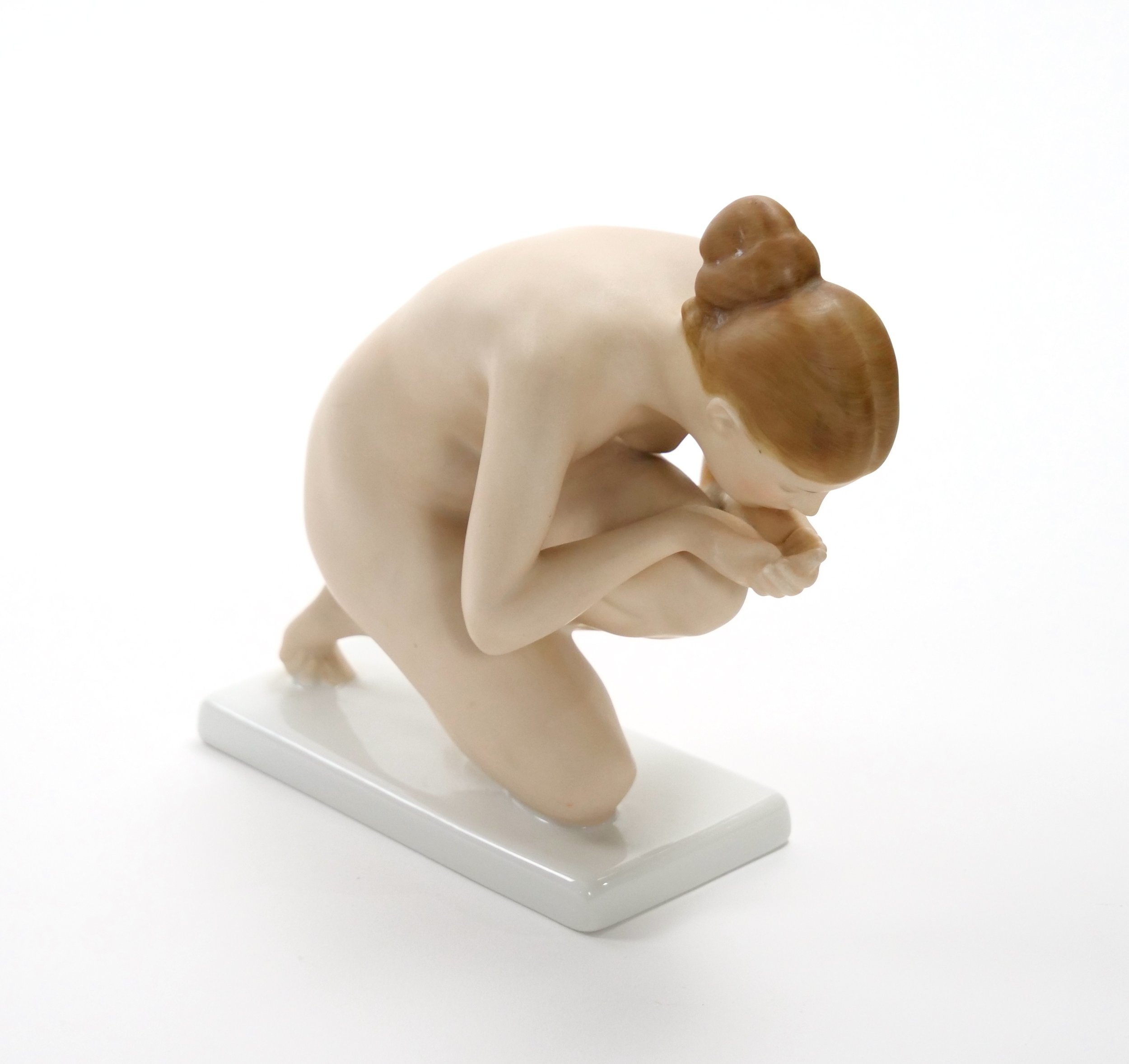 Image 3 of 9
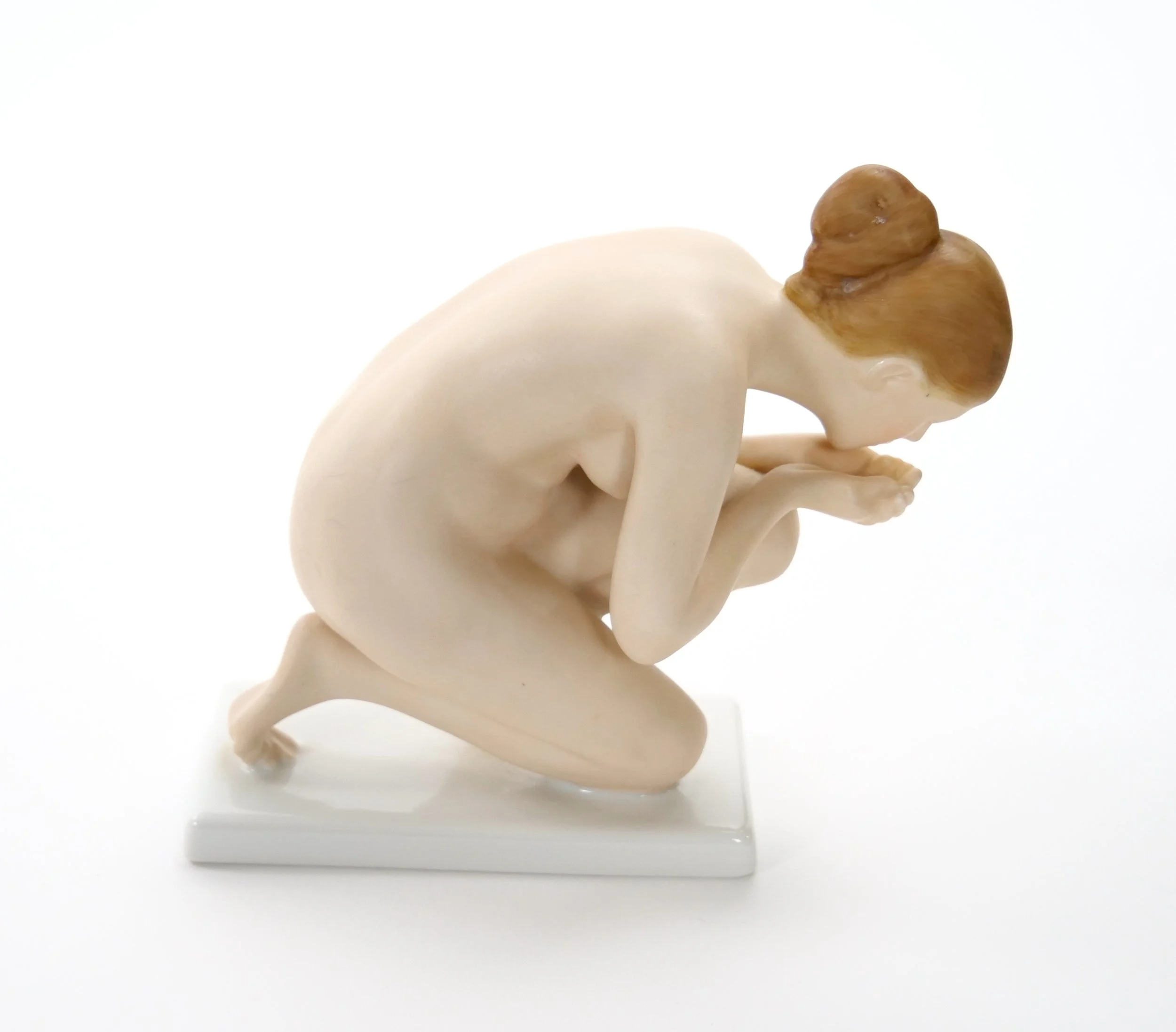 Image 5 of 9
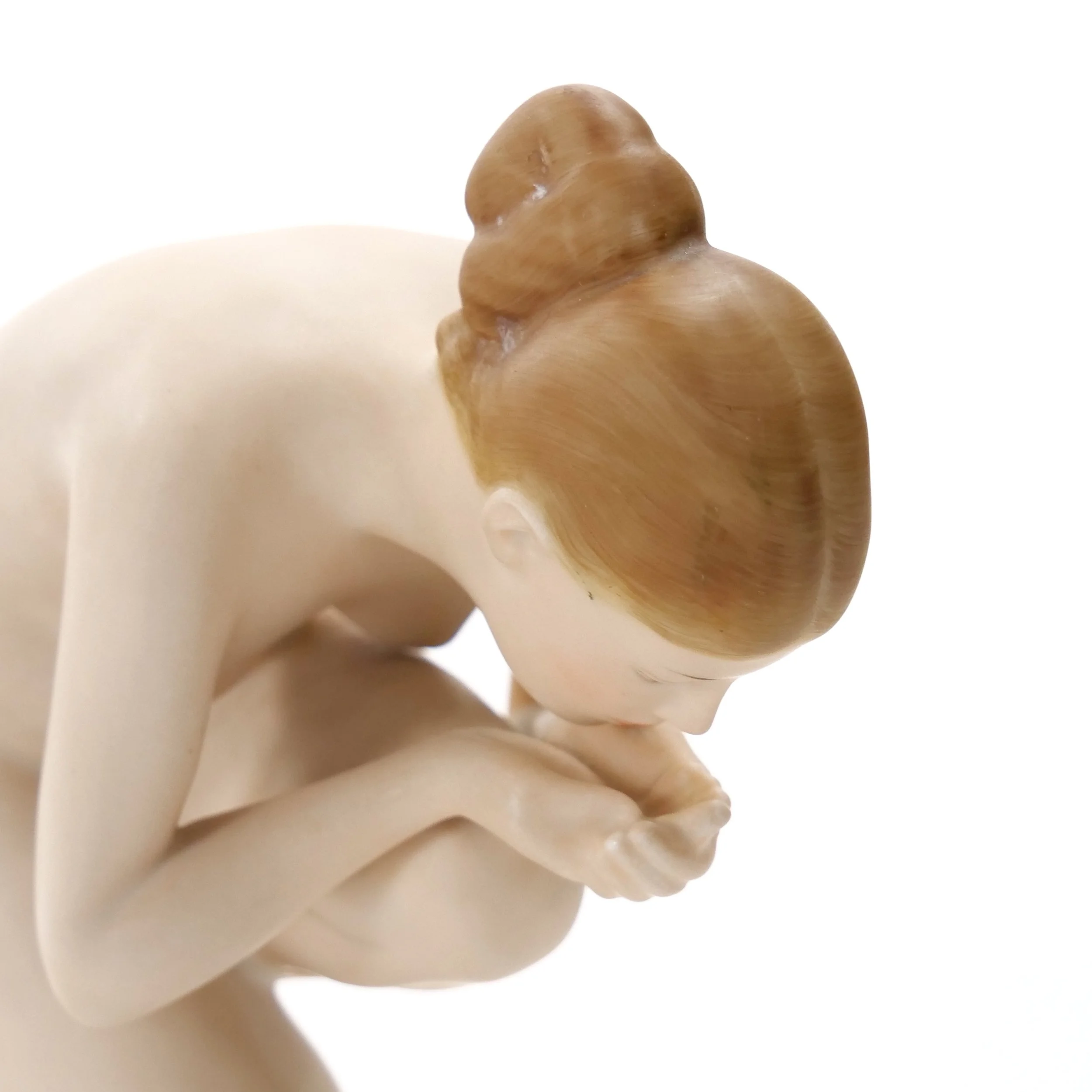 Image 6 of 9
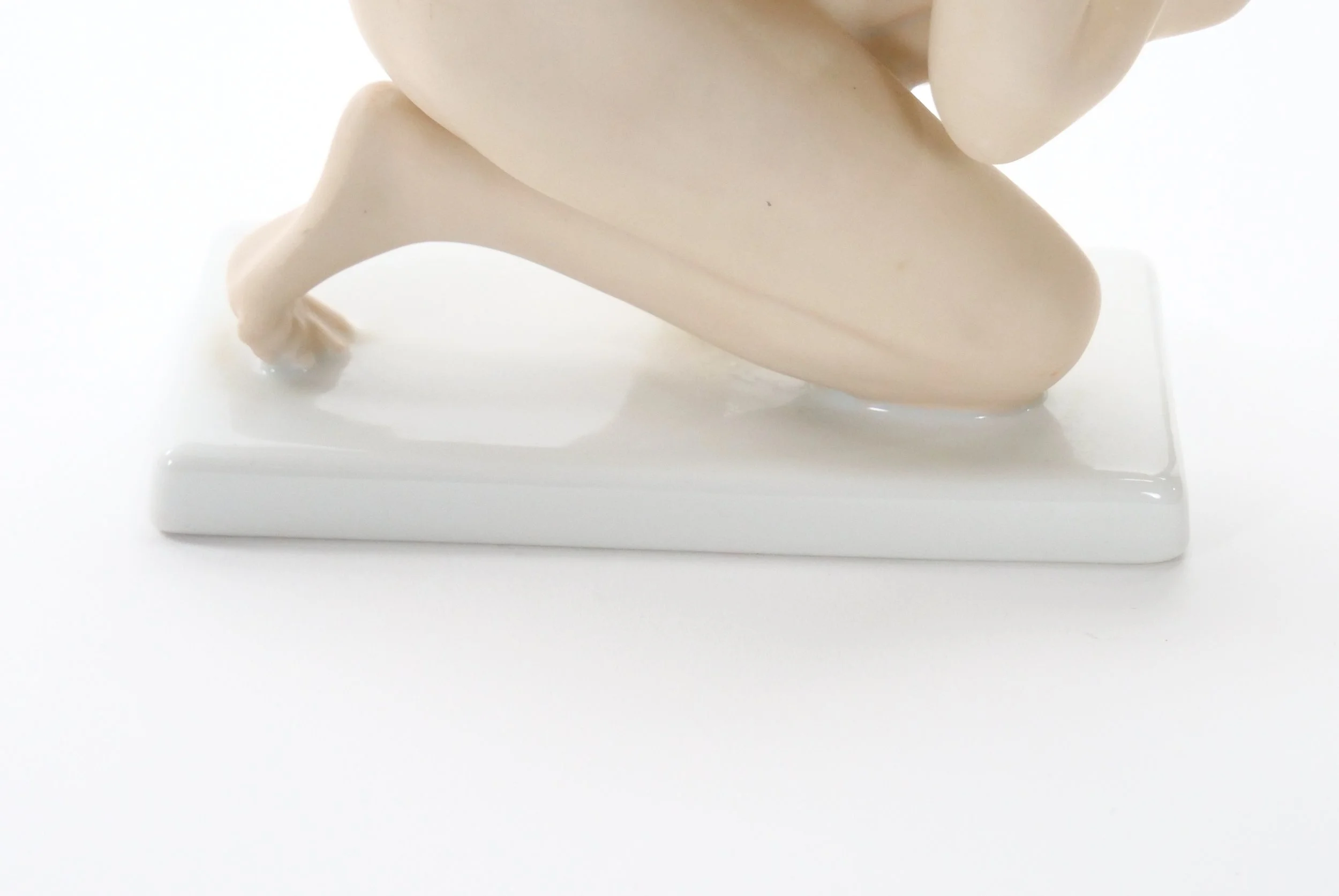 Image 7 of 9
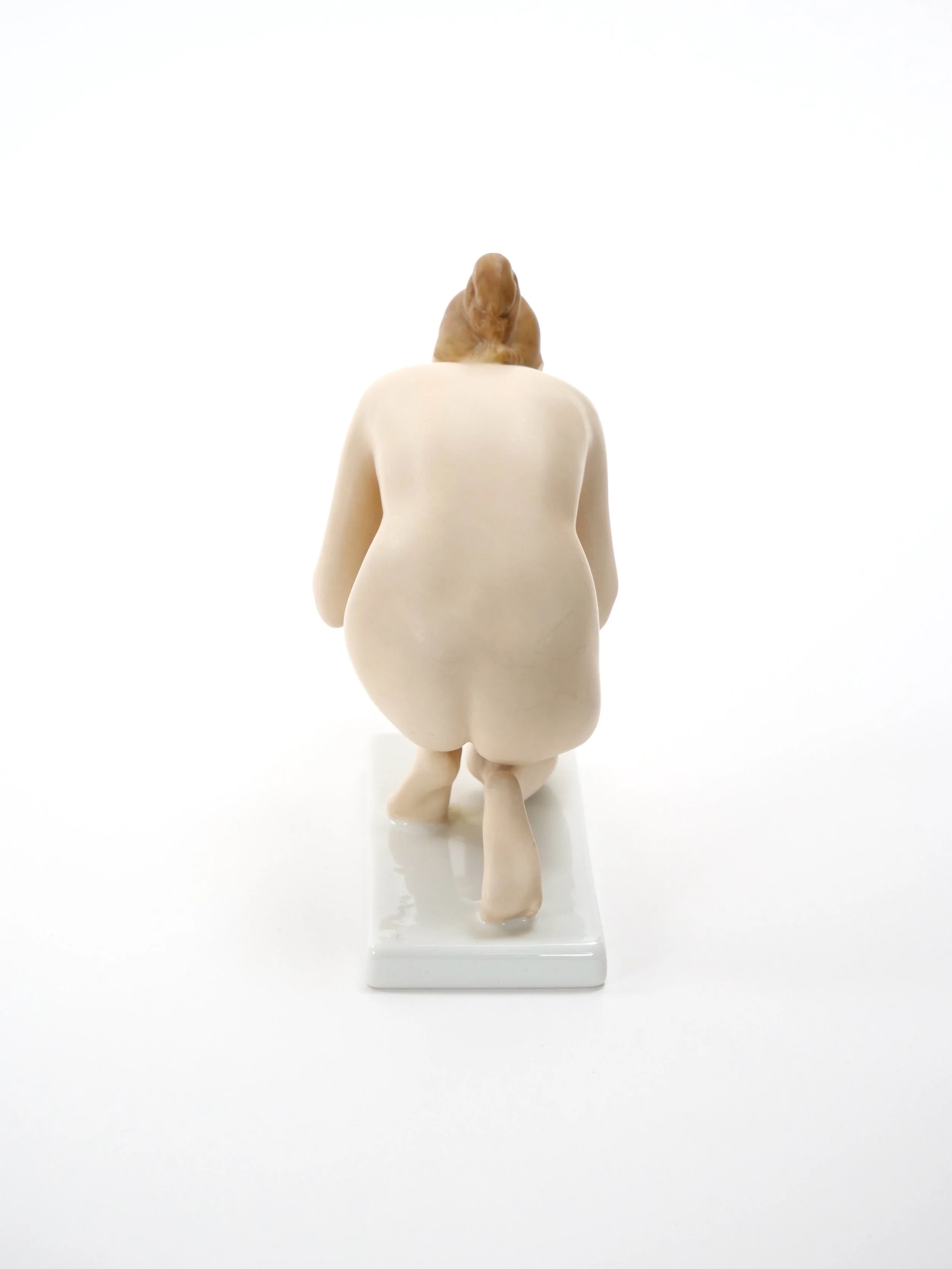 Image 8 of 9
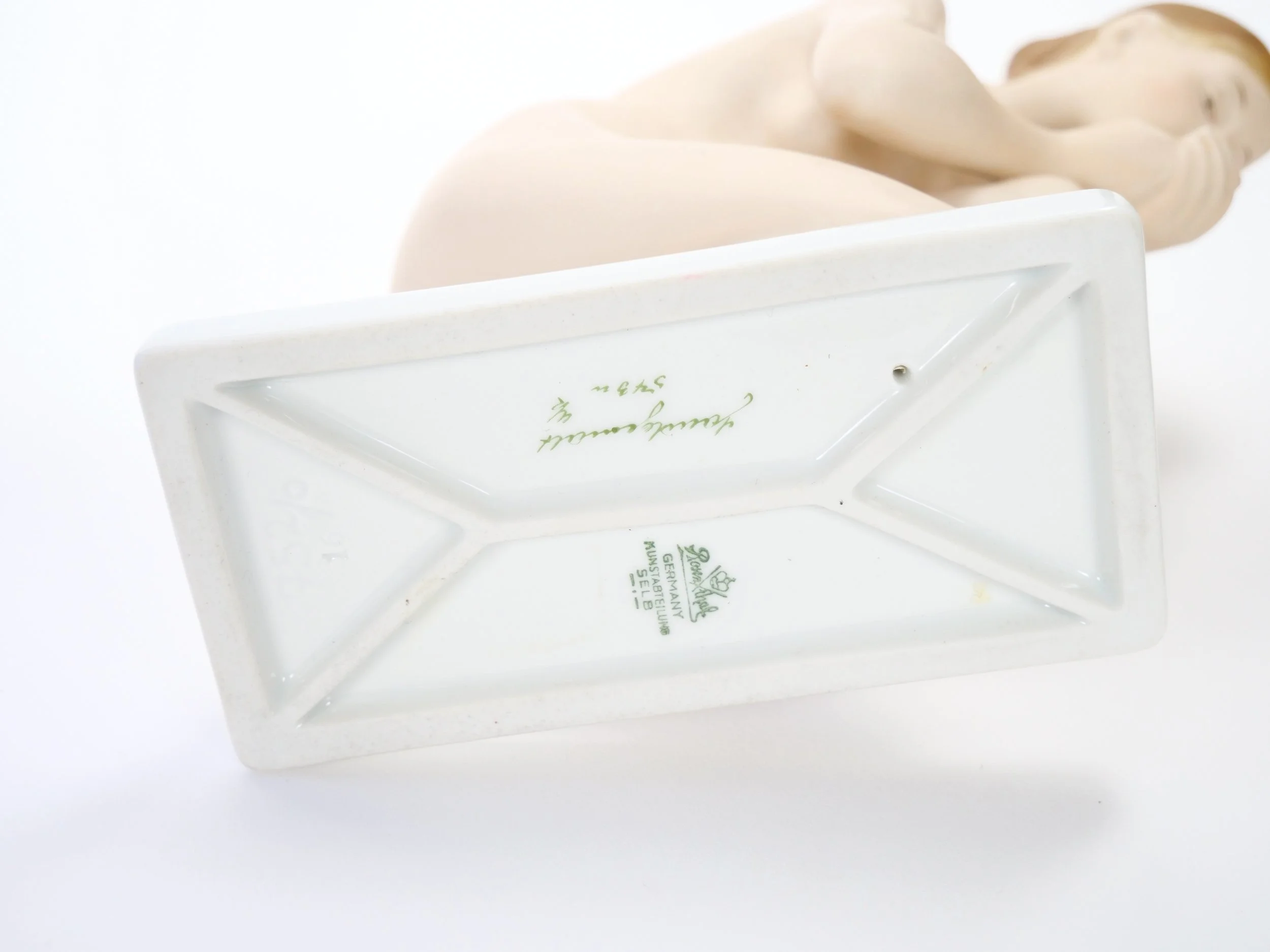 Image 9 of 9